
Overview
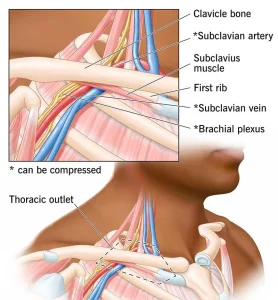
Thoracic outlet syndrome is a condition that occurs when blood vessels or nerves in the space between the collarbone and the first rib, known as the thoracic outlet, become compressed. This pressure can affect the nerves, arteries, or veins that travel from the neck to the arm, leading to pain and other symptoms in the shoulders, neck, and arms.
The condition can develop due to anatomical abnormalities, injuries, or repetitive movements that place stress on this area. Thoracic outlet syndrome is generally classified into three types based on the structure being compressed: neurogenic, venous, and arterial. Early diagnosis and proper treatment can help relieve symptoms and prevent complications.
Symptoms
Symptoms vary depending on whether nerves or blood vessels are being compressed.
Common symptoms include:
-
Pain in the neck, shoulder, or arm
-
Numbness or tingling in the fingers
-
Weakness in the hand or arm
-
Coldness or discoloration in the hand or fingers
-
Swelling in the arm
-
Reduced grip strength
-
A feeling of heaviness in the arm
-
Fatigue in the arm during activity
Symptoms may worsen with certain arm positions, especially when lifting the arms overhead.
Causes
Thoracic outlet syndrome occurs when structures in the thoracic outlet area compress nearby nerves or blood vessels.
Possible causes include:
-
Extra rib above the first rib, known as a cervical rib
-
Poor posture that causes the shoulders to droop forward
-
Injury from accidents such as car crashes
-
Repetitive overhead movements in sports or work activities
-
Muscle enlargement or tightness in the neck and shoulder area
-
Tumors or abnormal growths in the thoracic outlet region
These factors can reduce the available space in the thoracic outlet and increase pressure on nerves or blood vessels.
Risk Factors
Certain individuals are more likely to develop thoracic outlet syndrome.
Risk factors include:
-
Jobs or activities that require repetitive arm movements
-
Poor posture, especially from prolonged desk work
-
Participation in sports such as swimming, baseball, or weightlifting
-
Previous neck or shoulder injuries
-
Congenital abnormalities such as a cervical rib
-
Female gender
-
Being between the ages of 20 and 50
These factors may increase the likelihood of compression in the thoracic outlet region.
Complications
If left untreated, thoracic outlet syndrome can lead to several complications depending on the type of compression involved.
Possible complications include:
-
Permanent nerve damage
-
Blood clots in the veins of the arm
-
Reduced blood flow to the arm or hand
-
Muscle weakness or wasting in the hand
-
Chronic pain and limited arm function
Early treatment can help reduce the risk of long-term complications.
Prevention
While not all cases can be prevented, certain lifestyle adjustments can help reduce the risk of developing thoracic outlet syndrome.
Preventive measures include:
-
Maintaining good posture while sitting or standing
-
Taking frequent breaks during repetitive activities
-
Performing stretching and strengthening exercises for the neck and shoulders
-
Avoiding carrying heavy bags on one shoulder
-
Setting up an ergonomic workstation when working at a desk
-
Using proper techniques during sports and physical activities
Strengthening the muscles around the shoulder and improving posture can help reduce pressure on the nerves and blood vessels in the thoracic outlet area.
Advertisement
