
Overview
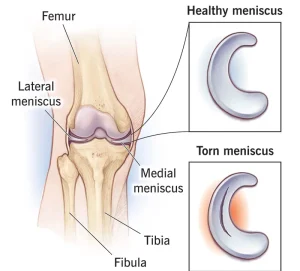
A torn meniscus is a common knee injury that occurs when one of the menisci in the knee becomes damaged. The menisci are two crescent shaped pieces of cartilage that act as cushions between the thigh bone and the shinbone. They help stabilize the knee joint and absorb shock during movement.
A meniscus tear can happen during sports activities that involve twisting or turning the knee, especially when the foot is planted on the ground. It can also occur due to normal wear and tear of the cartilage as people age. The severity of the injury can vary from a small tear to a more significant rupture that affects knee movement.
Symptoms
Symptoms of a torn meniscus may appear immediately after the injury or develop gradually.
Common symptoms include:
-
Pain in the knee, especially when twisting or rotating
-
Swelling in the knee joint
-
Stiffness and difficulty moving the knee
-
A popping sensation at the time of injury
-
Difficulty straightening or bending the knee fully
-
Feeling that the knee is locked or stuck
-
Instability or a feeling that the knee may give way
Symptoms may worsen with physical activity and improve with rest.
Causes
A torn meniscus usually occurs when the knee is forcefully twisted or rotated while bearing weight. This often happens during sports or sudden movements.
Common causes include:
-
Sudden twisting or pivoting of the knee during sports
-
Squatting or lifting heavy objects
-
Direct impact or trauma to the knee
-
Degenerative changes in the knee cartilage due to aging
In older adults, even simple activities such as standing up quickly or stepping awkwardly can cause a meniscus tear because the cartilage becomes weaker over time.
Risk factors
Several factors may increase the risk of a torn meniscus:
-
Participation in sports that involve sudden stops or turns
-
Aging, which weakens knee cartilage
-
Previous knee injuries
-
Excess body weight that places stress on the knee joint
-
Occupations that require frequent kneeling or squatting
People who regularly engage in high impact activities may be more likely to experience this injury.
Complications
If a torn meniscus is not treated properly, it may lead to long term knee problems.
Possible complications include:
-
Chronic knee pain
-
Persistent swelling
-
Limited range of motion
-
Knee instability
-
Increased risk of developing knee osteoarthritis
Proper treatment and rehabilitation can help restore knee function and reduce the risk of these complications.
Prevention
Certain measures may help reduce the risk of a torn meniscus:
-
Strengthen the muscles around the knee through regular exercise
-
Warm up properly before physical activities or sports
-
Use proper techniques when lifting heavy objects
-
Maintain a healthy body weight to reduce stress on the knees
-
Wear supportive footwear during physical activity
-
Avoid sudden twisting movements when the foot is firmly planted
Keeping the knee muscles strong and flexible can help protect the joint and reduce the likelihood of injury.
Advertisement
