
Overview
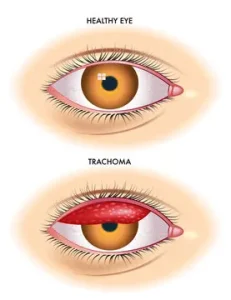
Trachoma is a bacterial eye infection that affects the inner surface of the eyelids and the cornea. It is caused by the bacterium Chlamydia trachomatis and spreads through direct contact with infected eye or nasal discharge, contaminated objects, or flies that come into contact with the eyes. Trachoma is one of the leading infectious causes of preventable blindness worldwide.
The infection is most common in areas with poor sanitation and limited access to clean water. Repeated infections over time can lead to scarring of the eyelids, which may cause the eyelashes to turn inward and rub against the surface of the eye. Without proper treatment, this can eventually damage the cornea and lead to vision loss.
Symptoms
Symptoms of trachoma may start mildly and gradually worsen with repeated infections.
Common symptoms include:
-
Redness of the eyes
-
Eye irritation or itching
-
Mild eye pain or discomfort
-
Swelling of the eyelids
-
Sensitivity to light
-
Watery or mucous discharge from the eyes
-
Blurred vision in advanced stages
In severe cases, the eyelashes may turn inward and scratch the cornea, leading to serious eye damage.
Causes
Trachoma is caused by infection with the bacterium Chlamydia trachomatis. The bacteria spread easily in environments where hygiene and sanitation are poor.
The infection can spread through:
-
Direct contact with eye or nasal discharge from an infected person
-
Sharing towels, clothing, or bedding with infected individuals
-
Flies that carry the bacteria from person to person
-
Poor facial hygiene
Children are particularly vulnerable because they often live in close contact with others and may not maintain proper hygiene.
Risk factors
Several factors increase the risk of developing trachoma:
-
Living in crowded households
-
Poor access to clean water
-
Poor sanitation and hygiene
-
Living in rural or underdeveloped areas
-
Frequent contact with infected individuals
-
Young age, especially in children
Communities with limited healthcare access are more likely to experience higher infection rates.
Complications
Repeated or untreated infections can lead to serious eye complications.
Possible complications include:
-
Scarring of the inner eyelids
-
Inward turning of the eyelashes
-
Chronic eye pain and irritation
-
Damage to the cornea
-
Partial or complete loss of vision
Blindness caused by trachoma often develops after many years of repeated infection.
Prevention
Preventing trachoma focuses on improving hygiene and reducing the spread of infection.
Helpful preventive measures include:
-
Wash the face regularly with clean water
-
Maintain good personal hygiene
-
Avoid sharing towels or personal items
-
Improve access to clean water and sanitation
-
Control flies in living areas
-
Seek medical treatment for eye infections early
Community health programs that promote hygiene and provide antibiotic treatment play an important role in reducing the spread of trachoma.
Advertisement
