
Overview
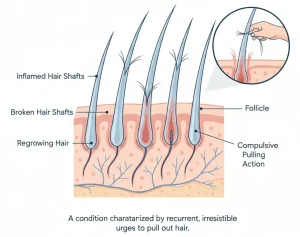
Trichotillomania, also known as hair pulling disorder, is a mental health condition in which a person feels a strong urge to pull out their own hair. The behavior is often difficult to control and can lead to noticeable hair loss on the scalp, eyebrows, eyelashes, or other parts of the body.
People with trichotillomania may pull hair as a response to stress, anxiety, boredom, or tension. Some individuals experience a sense of relief or satisfaction after pulling the hair. The condition is classified as a body focused repetitive behavior and may begin during childhood or adolescence.
Symptoms
Symptoms of trichotillomania can vary from mild to severe and often develop gradually over time.
Common symptoms include:
-
Repeatedly pulling out hair from the scalp, eyebrows, eyelashes, or other body areas
-
Noticeable hair loss or thinning hair
-
Strong urges to pull hair that are difficult to resist
-
Increasing tension before pulling hair
-
Feeling relief or satisfaction after pulling hair
-
Attempts to stop the behavior but difficulty doing so
-
Avoiding social situations because of hair loss or embarrassment
Some individuals may also bite, chew, or play with the pulled hair.
Causes
The exact cause of trichotillomania is not fully understood. It is believed to result from a combination of genetic, psychological, and environmental factors.
Possible contributing causes include:
-
Genetic predisposition to compulsive behaviors
-
Chemical imbalances in brain pathways related to impulse control
-
Stress or emotional trauma
-
Anxiety or mood disorders
In some cases, hair pulling becomes a learned coping mechanism for dealing with negative emotions.
Risk factors
Several factors may increase the likelihood of developing trichotillomania.
These include:
-
Family history of trichotillomania or related disorders
-
Onset during childhood or adolescence
-
High levels of stress or anxiety
-
Coexisting mental health conditions such as depression or obsessive compulsive disorder
The condition is more commonly reported in females, especially during adolescence.
Complications
Trichotillomania can lead to physical and emotional complications if the behavior continues for a long time.
Possible complications include:
-
Permanent hair loss or damage to hair follicles
-
Skin irritation or infections in affected areas
-
Emotional distress, shame, or embarrassment
-
Social withdrawal or reduced self confidence
-
Digestive problems if pulled hair is swallowed
These effects can significantly impact a person’s quality of life.
Prevention
There is no guaranteed way to prevent trichotillomania, but early recognition and treatment can help manage the condition and reduce its impact.
Helpful approaches include:
-
Seeking professional mental health support
-
Practicing stress management techniques
-
Developing healthy coping strategies for anxiety and tension
-
Cognitive behavioral therapy or habit reversal training
-
Building supportive routines and environments
Early intervention can help individuals gain better control over hair pulling behaviors and improve emotional well being.
Request an appointment
Advertisement
