
Overview
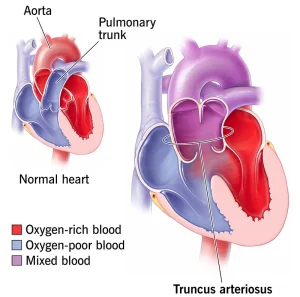
Truncus arteriosus is a rare congenital heart defect present at birth in which a single large blood vessel comes out of the heart instead of two separate arteries. Normally, the heart has two main arteries: the pulmonary artery, which carries blood to the lungs, and the aorta, which carries oxygen rich blood to the rest of the body. In truncus arteriosus, these two arteries remain combined as one vessel.
Because of this abnormal structure, oxygen rich and oxygen poor blood mix together before being pumped throughout the body. This can cause the heart to work harder and may lead to reduced oxygen delivery to the body’s tissues. Truncus arteriosus usually requires surgical treatment early in life.
Symptoms
Symptoms of truncus arteriosus usually appear shortly after birth because the body does not receive enough oxygenated blood.
Common symptoms include:
-
Rapid breathing
-
Bluish tint to the skin, lips, or nails (cyanosis)
-
Poor feeding in infants
-
Excessive sweating, especially during feeding
-
Fatigue or weakness
-
Poor weight gain
-
Fast heartbeat
The severity of symptoms may vary depending on the amount of blood flow to the lungs and the heart’s ability to pump effectively.
Causes
Truncus arteriosus occurs during early fetal development when the heart and major blood vessels are forming. Normally, a single vessel divides into the pulmonary artery and the aorta. In this condition, the separation does not occur properly, leaving one large shared vessel.
The exact cause is often unknown, but genetic factors and environmental influences during pregnancy may play a role. In some cases, the condition may be associated with certain genetic syndromes.
Risk factors
Certain factors during pregnancy may increase the risk of congenital heart defects such as truncus arteriosus.
Possible risk factors include:
-
Family history of congenital heart defects
-
Maternal diabetes during pregnancy
-
Viral infections during pregnancy
-
Exposure to harmful substances such as alcohol or certain medications
-
Poor prenatal nutrition
However, many babies born with truncus arteriosus have no known risk factors.
Complications
If not treated, truncus arteriosus can lead to serious health complications due to abnormal blood circulation and strain on the heart.
Possible complications include:
-
Heart failure
-
Pulmonary hypertension
-
Delayed growth and development in infants
-
Reduced oxygen levels in the body
-
Increased risk of infections affecting the heart
Early surgical repair can significantly improve outcomes and allow many children to live active lives.
Prevention
There is no guaranteed way to prevent truncus arteriosus, but healthy pregnancy practices may help lower the risk of congenital heart defects.
Preventive measures include:
-
Receiving regular prenatal care
-
Managing chronic health conditions such as diabetes
-
Avoiding alcohol, tobacco, and harmful drugs during pregnancy
-
Taking recommended prenatal vitamins including folic acid
-
Protecting against infections during pregnancy
Prenatal screening and early diagnosis help ensure timely treatment and better long term outcomes for affected infants.
Advertisement
