
Overview
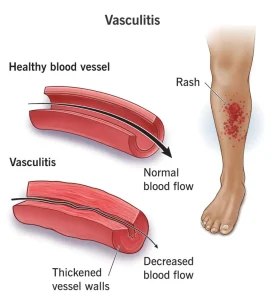
Vasculitis is a group of disorders characterized by inflammation of blood vessels. The inflammation can cause the walls of blood vessels to thicken, narrow, weaken, or scar, which may restrict blood flow to organs and tissues. This reduced blood supply can lead to organ damage and serious health problems.
Vasculitis can affect blood vessels of any size, including arteries, veins, and capillaries. Some forms are mild and short-term, while others are chronic and potentially life-threatening. Early diagnosis and appropriate treatment are important to prevent complications.
Symptoms
Symptoms of vasculitis vary widely depending on the type of vasculitis and the organs involved. General symptoms may include:
-
Fever
-
Fatigue and weakness
-
Unintended weight loss
-
Muscle and joint pain
-
Loss of appetite
Organ-specific symptoms may include:
-
Skin rashes, ulcers, or purplish spots
-
Numbness or weakness due to nerve involvement
-
Shortness of breath or cough
-
Abdominal pain or blood in stool
-
Headaches or vision problems
-
Kidney problems such as blood or protein in urine
Causes
Vasculitis occurs when the immune system mistakenly attacks blood vessels, causing inflammation. In many cases, the exact cause is unknown.
Possible causes and triggers include:
-
Autoimmune disorders
-
Infections that trigger an abnormal immune response
-
Certain medications
-
Allergic reactions
-
Blood cancers in rare cases
Vasculitis may occur on its own or as a complication of another disease.
Risk Factors
Several factors may increase the risk of developing vasculitis:
-
Autoimmune diseases such as rheumatoid arthritis or lupus
-
Chronic infections
-
Smoking
-
Certain medications
-
Family history of autoimmune or inflammatory conditions
-
Older age for some types and younger age for others
Complications
If vasculitis is not properly treated, it can lead to serious complications:
-
Permanent organ damage
-
Narrowing or blockage of blood vessels
-
Formation of aneurysms
-
Increased risk of blood clots
-
Vision loss in some forms
-
Kidney failure in severe cases
The severity of complications depends on the type of vasculitis and how quickly treatment begins.
Prevention
There is no guaranteed way to prevent vasculitis, especially when the cause is unknown. However, certain steps may help reduce risk and prevent complications:
-
Managing underlying autoimmune or chronic conditions
-
Treating infections promptly
-
Avoiding smoking
-
Regular medical follow-up for early symptom detection
-
Adhering to prescribed treatment plans
Early diagnosis, ongoing monitoring, and proper medical care are essential for managing vasculitis and maintaining long-term health.
Request an appointment
Advertisement
