
Overview
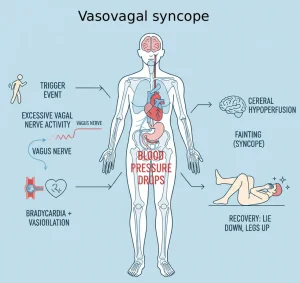
Vasovagal syncope is a common and usually harmless cause of fainting that happens when the body has an exaggerated response to certain triggers. This response leads to a sudden drop in heart rate and blood pressure, reducing blood flow to the brain and causing a brief loss of consciousness. Recovery is typically quick and complete.
It can affect people of all ages and often begins in adolescence or early adulthood. While not usually dangerous, recurrent episodes can interfere with daily life and increase the risk of injury from falls.
Symptoms
Symptoms often appear gradually and may act as warning signs before fainting occurs:
-
Lightheadedness or dizziness
-
Nausea
-
Sweating
-
Pale or clammy skin
-
Blurred or tunnel vision
-
Ringing in the ears
-
Feeling warm or flushed
-
Temporary loss of consciousness
After an episode, individuals may feel tired, weak, or mildly confused for a short time.
Causes
Vasovagal syncope occurs due to an abnormal reflex involving the nervous system that controls heart rate and blood pressure. When triggered, blood vessels widen and the heart rate slows, leading to reduced blood flow to the brain.
Common triggers include:
-
Prolonged standing
-
Emotional stress, fear, or anxiety
-
Pain
-
Seeing blood or medical procedures
-
Dehydration
-
Heat exposure
-
Straining during coughing, urination, or bowel movements
Risk Factors
Certain factors may increase the likelihood of vasovagal syncope:
-
History of previous fainting episodes
-
Young age, especially teenagers and young adults
-
Dehydration or low blood volume
-
Standing for long periods
-
Hot or crowded environments
-
Emotional distress
-
Conditions affecting blood pressure regulation
Complications
Vasovagal syncope itself is not life-threatening, but complications may occur:
-
Injuries from falls during fainting episodes
-
Fear or anxiety about future episodes
-
Reduced confidence in daily activities
-
Limitations in work or social situations in frequent cases
Repeated or unexplained fainting should be evaluated to rule out other medical conditions.
Prevention
Many episodes of vasovagal syncope can be prevented by recognizing triggers and early warning signs:
-
Staying well hydrated
-
Avoiding prolonged standing when possible
-
Sitting or lying down at the first sign of symptoms
-
Using physical counterpressure techniques such as leg crossing or muscle tensing
-
Managing stress and anxiety
-
Following medical advice for recurrent or severe episodes
With proper awareness and preventive strategies, most individuals can effectively reduce the frequency and impact of vasovagal syncope.
Request an appointment
Advertisement
