
Overview
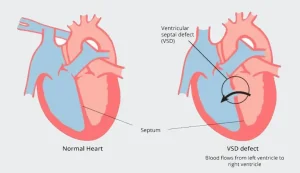
Ventricular septal defect (VSD) is a congenital heart condition in which there is a hole in the septum that separates the heart’s two lower chambers, called the ventricles. This opening allows oxygen-rich blood from the left ventricle to mix with oxygen-poor blood in the right ventricle, increasing blood flow to the lungs.
VSD is one of the most common congenital heart defects. The size and location of the defect determine the severity of symptoms. Small defects may close on their own, while larger defects can cause significant heart and lung problems if not treated.
Symptoms
Symptoms of ventricular septal defect depend on the size of the hole and the amount of blood flow through it. Small defects may cause no symptoms, while larger defects may lead to:
-
Rapid or labored breathing
-
Shortness of breath, especially during feeding or activity
-
Poor feeding and slow weight gain in infants
-
Fatigue
-
Sweating, particularly during feeding in babies
-
Frequent respiratory infections
-
Bluish discoloration of lips or skin in severe cases
Symptoms often appear in infancy for moderate to large defects.
Causes
Ventricular septal defect develops during early fetal growth when the heart does not form completely. The exact cause is often unknown.
Possible contributing factors include:
-
Genetic abnormalities
-
Chromosomal disorders such as Down syndrome
-
Maternal infections during pregnancy
-
Poorly controlled diabetes in the mother
-
Exposure to certain medications or substances during pregnancy
VSD is present at birth and is not caused by lifestyle factors after birth.
Risk Factors
Certain factors increase the likelihood of a baby being born with a ventricular septal defect:
-
Family history of congenital heart defects
-
Genetic or chromosomal conditions
-
Maternal illnesses during pregnancy
-
Use of harmful substances during pregnancy
-
Advanced maternal age
Complications
If a ventricular septal defect is moderate or large and left untreated, it can lead to serious complications:
-
Heart failure
-
High blood pressure in the lungs
-
Enlargement of the heart
-
Delayed growth and development
-
Irregular heart rhythms
-
Increased risk of heart infections
-
Reduced life expectancy in severe cases
Early diagnosis and appropriate treatment reduce the risk of long-term complications.
Prevention
There is no guaranteed way to prevent ventricular septal defect, but certain steps may reduce the risk:
-
Good prenatal care and regular medical checkups
-
Managing chronic health conditions before and during pregnancy
-
Avoiding alcohol, smoking, and harmful drugs during pregnancy
-
Staying up to date with vaccinations
-
Seeking genetic counseling when there is a family history of congenital heart disease
Early detection and timely medical care play an important role in improving outcomes for individuals with ventricular septal defect.
Request an appointment
Advertisement
