
Overview
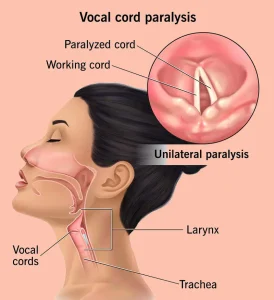
Vocal cord paralysis is a condition in which one or both vocal cords cannot move properly. The vocal cords may remain immobile in a fixed position or move only partially, affecting the ability to speak, swallow, and breathe normally.
This condition can occur suddenly or gradually and may result from nerve damage, injury, infection, or certain medical procedures. While some cases improve on their own, others require medical or surgical intervention to restore function.
Symptoms
Symptoms of vocal cord paralysis depend on whether one or both cords are affected and their position. Common symptoms include:
-
Hoarseness or breathy voice
-
Weak or soft voice that tires easily
-
Difficulty speaking loudly or projecting the voice
-
Loss of vocal pitch or vocal range
-
Choking or coughing while eating or drinking
-
Difficulty swallowing, sometimes with aspiration
-
Shortness of breath if both vocal cords are affected
Symptoms may develop gradually or appear suddenly after injury or surgery.
Causes
Vocal cord paralysis occurs when the nerves controlling the vocal cords, particularly the recurrent laryngeal nerve, are damaged or disrupted. Causes include:
-
Surgical injury to the neck, chest, or thyroid
-
Viral infections affecting the nerves
-
Trauma or injury to the neck or chest
-
Tumors pressing on the vocal cord nerves
-
Neurological disorders, such as stroke or Parkinson’s disease
-
Idiopathic cases where no clear cause is identified
Risk Factors
Factors that increase the risk of vocal cord paralysis include:
-
Recent neck, chest, or thyroid surgery
-
Viral respiratory infections
-
Tumors or growths near the vocal cord nerves
-
Neurological disorders
-
Trauma to the neck or chest
Complications
Vocal cord paralysis can lead to several complications if left untreated:
-
Persistent hoarseness and voice fatigue
-
Difficulty swallowing and risk of aspiration pneumonia
-
Breathing difficulties, especially if both vocal cords are affected
-
Social or occupational challenges due to impaired voice
-
Emotional stress or anxiety from communication difficulties
Prevention
While not all cases can be prevented, some measures can reduce the risk of vocal cord paralysis:
-
Careful surgical techniques during neck, chest, or thyroid procedures
-
Prompt treatment of viral infections affecting the throat or nerves
-
Avoiding neck or chest trauma
-
Regular monitoring for tumors or growths near the vocal cord nerves
-
Seeking medical attention for persistent voice changes
Early diagnosis and intervention, including voice therapy or surgical procedures, can improve voice function and reduce complications.
Advertisement
