
Overview
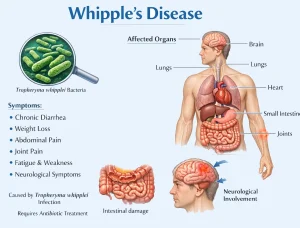
Whipple’s disease is a rare bacterial infection caused by Tropheryma whipplei. It primarily affects the small intestine, leading to malabsorption of nutrients, but can also impact the heart, joints, brain, and other organs.
The disease progresses slowly and may remain undiagnosed for years due to its nonspecific symptoms. Early diagnosis and treatment with antibiotics are essential to prevent severe complications and organ damage.
Symptoms
Symptoms of Whipple’s disease can vary widely depending on the organs affected. Common symptoms include:
-
Chronic diarrhea or loose stools
-
Abdominal pain and cramping
-
Unintended weight loss
-
Fatigue and weakness
-
Joint pain or arthritis
-
Fever
-
Swollen lymph nodes
-
Neurological symptoms such as confusion, memory loss, or difficulty coordinating movements in advanced cases
-
Pale skin due to anemia in some individuals
Symptoms often develop gradually and may mimic other gastrointestinal or autoimmune conditions.
Causes
Whipple’s disease is caused by infection with the bacterium Tropheryma whipplei. The exact mechanism of infection is not fully understood, but it is thought to enter the body through the digestive tract. The disease is rare, and most people exposed to the bacterium do not develop symptoms, suggesting a role of immune system susceptibility.
Risk Factors
Factors that may increase the risk of developing Whipple’s disease include:
-
Middle-aged or older age, most commonly men over 40
-
Occupational or environmental exposure to soil or sewage, where the bacterium may be present
-
Impaired immune system function
-
Genetic predisposition affecting immune response
Complications
If left untreated, Whipple’s disease can lead to serious complications:
-
Severe malnutrition due to poor nutrient absorption
-
Heart problems, including endocarditis
-
Neurological complications such as dementia, seizures, or eye movement abnormalities
-
Joint damage from chronic arthritis
-
Organ failure in advanced cases
-
Potentially fatal outcome if untreated
Prevention
There is no guaranteed way to prevent Whipple’s disease due to its rare and unpredictable nature, but certain measures may reduce risk or aid early detection:
-
Practicing good hygiene and proper handwashing
-
Avoiding exposure to contaminated soil or sewage when possible
-
Seeking prompt medical attention for persistent gastrointestinal or joint symptoms
-
Early diagnosis and treatment with appropriate antibiotics to prevent severe complications
With timely diagnosis and long-term antibiotic therapy, most individuals with Whipple’s disease can recover and prevent organ damage.
Advertisement
