
Overview
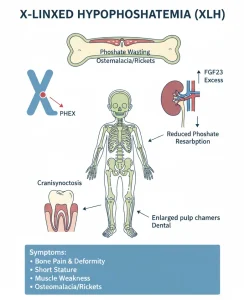
X-Linked Hypophosphatemia, commonly known as XLH, is a rare inherited disorder that affects bone and tooth development. It is caused by abnormal regulation of phosphate in the body, leading to chronically low levels of phosphate in the blood. Phosphate is essential for strong bones and teeth, and long-term deficiency results in impaired bone mineralization.
XLH is usually diagnosed in childhood, though milder cases may not be recognized until adulthood. The condition affects both males and females and is the most common form of inherited rickets.
Symptoms
Symptoms of XLH vary by age and severity. In children, symptoms are often related to bone growth, while adults may experience chronic pain and joint problems. Common symptoms include:
-
Bowing of the legs or knock-knees
-
Short stature or slowed growth in children
-
Bone pain and muscle weakness
-
Delayed walking in young children
-
Dental problems, including frequent tooth abscesses
-
Joint stiffness or limited mobility in adults
Symptoms may worsen over time without appropriate treatment.
Causes
XLH is caused by mutations in the PHEX gene, which plays a role in regulating phosphate levels in the body. These mutations lead to increased levels of a hormone that causes the kidneys to lose phosphate in the urine.
As a result, phosphate levels in the blood remain low, and vitamin D activation is impaired. This combination prevents proper bone mineralization and leads to skeletal abnormalities.
The disorder is inherited in an X-linked dominant pattern, meaning a single altered gene can cause the condition.
Risk Factors
The primary risk factor for XLH is genetic inheritance. Factors that increase risk include:
-
Having a parent with X-Linked Hypophosphatemia
-
Family history of rickets or unexplained bone deformities
-
Being born to an affected mother or father
There are no known lifestyle or environmental risk factors that cause XLH.
Complications
If left untreated or inadequately managed, XLH can lead to multiple long-term complications. These may include:
-
Persistent bone deformities
-
Chronic bone and joint pain
-
Early-onset osteoarthritis
-
Reduced mobility
-
Dental infections and tooth loss
-
Hearing problems in some individuals
Early diagnosis and appropriate treatment can reduce the severity of complications.
Prevention
There is no known way to prevent X-Linked Hypophosphatemia because it is a genetic condition. However, early identification and ongoing management can help prevent many complications. Preventive measures include:
-
Early screening in children with a family history of XLH
-
Regular monitoring of phosphate levels and bone health
-
Timely treatment to support normal growth and bone strength
-
Genetic counseling for affected individuals and families
With proper medical care and long-term follow-up, people with XLH can maintain improved bone health and quality of life.
Advertisement
