
Overview
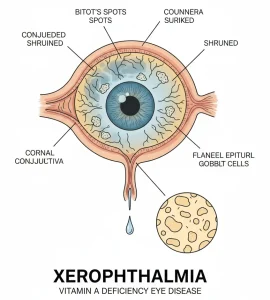
Xerophthalmia is an eye condition caused by a deficiency of vitamin A, leading to dryness of the conjunctiva and cornea. Vitamin A is essential for maintaining healthy vision and the normal function of the eye’s surface tissues. When levels are insufficient, the eyes cannot produce enough moisture, resulting in progressive damage.
Xerophthalmia is more common in developing regions and primarily affects young children and pregnant women with poor nutritional intake. If left untreated, it can progress to severe eye disease and permanent vision loss.
Symptoms
Symptoms of xerophthalmia develop gradually and worsen as vitamin A deficiency becomes more severe. Common symptoms include:
-
Dryness of the eyes
-
Night blindness, especially difficulty seeing in low light
-
Irritation or burning sensation in the eyes
-
Redness or inflammation of the conjunctiva
-
Cloudiness or dryness of the cornea
In advanced stages, white foamy patches called Bitot spots may appear on the surface of the eye.
Causes
Xerophthalmia is caused by inadequate levels of vitamin A in the body. This deficiency interferes with the production of visual pigments and the maintenance of healthy epithelial tissues in the eyes.
Common causes include:
-
Poor dietary intake of vitamin A
-
Malabsorption disorders affecting fat-soluble vitamins
-
Chronic diarrhea or intestinal infections
-
Liver disease that impairs vitamin A storage
Limited access to vitamin A–rich foods is a major contributing factor in many regions.
Risk Factors
Certain groups are at higher risk of developing xerophthalmia. These include:
-
Children under five years of age
-
Pregnant and breastfeeding women
-
People with malnutrition
-
Individuals with gastrointestinal disorders that impair nutrient absorption
-
Those living in areas with limited access to diverse foods
Infections such as measles can also increase the risk by depleting vitamin A stores.
Complications
If not treated promptly, xerophthalmia can lead to serious and potentially irreversible complications. These may include:
-
Corneal ulcers
-
Softening of the cornea, known as keratomalacia
-
Permanent scarring of the cornea
-
Partial or complete blindness
-
Increased risk of eye infections
Early intervention greatly reduces the risk of long-term vision damage.
Prevention
Xerophthalmia is largely preventable through adequate nutrition and public health measures. Preventive strategies include:
-
Ensuring sufficient intake of vitamin A through diet or supplements
-
Consuming foods rich in vitamin A, such as leafy green vegetables, carrots, dairy products, and eggs
-
Vitamin A supplementation programs in high-risk populations
-
Prompt treatment of infections that may worsen vitamin A deficiency
-
Regular eye and nutritional health screenings
Improving overall nutrition and access to healthcare plays a key role in preventing xerophthalmia and its complications.
Advertisement
