
Overview
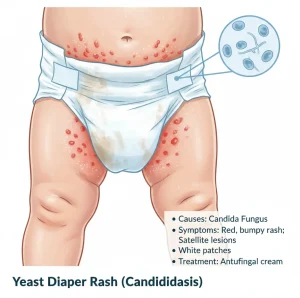
Yeast diaper rash is a common skin condition that affects infants and young children who wear diapers. It occurs when a type of fungus called Candida, which normally lives on the skin in small amounts, grows excessively in the warm, moist diaper area. This overgrowth leads to inflammation and irritation of the skin.
Yeast diaper rash often develops after a baby has had a regular diaper rash that does not improve with standard care. The diaper area provides ideal conditions for yeast to thrive, including warmth, moisture, and limited airflow. The rash may spread beyond the diaper region and can be uncomfortable or painful if not treated promptly.
With proper treatment and preventive measures, yeast diaper rash usually clears up within a few days to a couple of weeks. Early recognition is important to prevent worsening symptoms and complications.
Symptoms
Yeast diaper rash has distinct features that help differentiate it from other types of diaper rash. Symptoms may include:
-
Bright red rash with well-defined borders in the diaper area
-
Small red spots or pustules around the main rash, often called satellite lesions
-
Rash involving skin folds, such as the groin and inner thighs
-
Shiny or smooth-looking skin
-
Tenderness, pain, or increased fussiness during diaper changes
In some cases, the rash may spread to the lower abdomen or upper thighs. The affected skin may not improve with typical diaper rash creams.
Causes
Yeast diaper rash is caused by an overgrowth of Candida fungus. Several factors can contribute to this overgrowth:
-
Prolonged exposure to moisture from wet or soiled diapers
-
Warm environment within the diaper area
-
Skin irritation or breakdown from friction or frequent wiping
-
Recent antibiotic use, which can disrupt normal skin bacteria and allow yeast to multiply
Candida can also spread from other parts of the body, such as the mouth in babies with oral thrush, or from caregivers during diaper changes.
Risk factors
Certain conditions increase the likelihood of a baby developing a yeast diaper rash. Risk factors include:
-
Infrequent diaper changes
-
Diarrhea, which increases skin moisture and irritation
-
Use of antibiotics by the baby or breastfeeding parent
-
Weakened immune system
-
Previous or ongoing diaper rash that damages the skin barrier
Babies between 2 and 12 months of age are more commonly affected due to frequent diaper use and developing immune systems.
Complications
If left untreated, yeast diaper rash can lead to complications, including:
-
Worsening skin inflammation and pain
-
Skin cracking or open sores that may bleed
-
Secondary bacterial infections of the damaged skin
-
Persistent discomfort that interferes with feeding and sleep
In rare cases, severe or recurrent yeast diaper rash may signal an underlying health issue that requires medical evaluation.
Prevention
Preventing yeast diaper rash focuses on keeping the diaper area clean, dry, and protected. Helpful prevention strategies include:
-
Changing diapers frequently to reduce moisture
-
Gently cleaning the diaper area and allowing it to dry completely
-
Allowing diaper-free time to improve airflow
-
Using barrier creams or ointments as needed
-
Avoiding tight-fitting diapers or clothing
If antibiotics are necessary, monitoring the diaper area closely can help detect early signs of yeast overgrowth. Prompt treatment of regular diaper rash may also reduce the risk of developing a yeast infection.
Advertisement
