
Overview
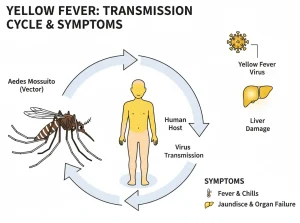
Yellow fever is a serious viral infection transmitted to humans through the bite of infected mosquitoes, primarily Aedes and Haemagogus species. The disease is most commonly found in parts of Africa and South America. Yellow fever is named after the jaundice, or yellowing of the skin and eyes, that can occur in severe cases due to liver damage.
The illness can range from a mild, flu-like condition to a life-threatening disease with severe complications. While there is no specific antiviral treatment for yellow fever, it is preventable through vaccination and effective mosquito control measures.
Symptoms
Symptoms of yellow fever usually appear 3 to 6 days after being bitten by an infected mosquito. Many people experience mild illness, while others develop severe disease. Common symptoms include:
-
Sudden onset of fever
-
Chills and muscle aches, especially back pain
-
Headache
-
Loss of appetite
-
Nausea or vomiting
-
Fatigue and weakness
In more severe cases, symptoms may progress to:
-
Yellowing of the skin and eyes
-
Dark-colored urine
-
Abdominal pain
-
Bleeding from the mouth, nose, eyes, or stomach
-
Organ failure affecting the liver and kidneys
Causes
Yellow fever is caused by the yellow fever virus, a member of the flavivirus family. The virus is spread through the bite of infected mosquitoes. Humans can become infected when mosquitoes feed on infected primates or humans and then bite another person.
The virus circulates in different transmission cycles, including forest, savannah, and urban cycles, allowing it to spread between animals and humans in various environments.
Risk factors
Factors that increase the risk of yellow fever include:
-
Living in or traveling to regions where yellow fever is endemic
-
Lack of vaccination against yellow fever
-
Exposure to mosquitoes in forested or rural areas
-
Outdoor activities such as farming, camping, or hiking
-
Poor mosquito control and limited access to healthcare
Travelers to affected areas who are unvaccinated are at particularly high risk.
Complications
Severe yellow fever can lead to serious and potentially fatal complications, including:
-
Liver failure and severe jaundice
-
Kidney failure
-
Internal bleeding and hemorrhage
-
Shock
-
Multiple organ failure
Even with medical care, severe yellow fever has a high risk of death. Survivors of severe disease may take weeks or months to fully recover.
Prevention
Yellow fever is largely preventable through vaccination and mosquito bite prevention. Key preventive measures include:
-
Receiving the yellow fever vaccine before traveling to high-risk areas
-
Using insect repellents containing approved active ingredients
-
Wearing long-sleeved clothing and long pants
-
Sleeping under mosquito nets when necessary
-
Eliminating standing water where mosquitoes can breed
Vaccination is the most effective way to prevent yellow fever and is required for entry into some countries to reduce the risk of international spread.
Advertisement
