
Overview
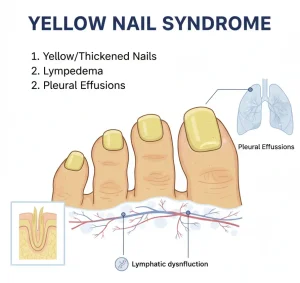
Yellow nail syndrome is a rare condition that affects the nails, lungs, and lymphatic system. It is named for the yellow discoloration that develops in the fingernails and toenails. In addition to nail changes, the condition is often associated with breathing problems and swelling caused by fluid buildup, known as lymphedema.
Yellow nail syndrome can occur at any age but is most often diagnosed in middle-aged and older adults. The condition usually develops slowly, and symptoms may appear at different times, making diagnosis challenging. Treatment focuses on managing symptoms, as there is no single cure for the syndrome.
Symptoms
Symptoms of yellow nail syndrome vary between individuals and may not all appear at once. The most common features involve the nails, respiratory system, and lymphatic system.
Nail-related symptoms may include:
-
Yellow or yellow-green discoloration of fingernails or toenails
-
Thickened, slow-growing nails
-
Curved or ridged nails
-
Partial or complete separation of the nail from the nail bed
Respiratory symptoms may include chronic cough, shortness of breath, or repeated lung infections. Some people develop pleural effusions, which are collections of fluid around the lungs.
Lymphatic symptoms may include swelling of the legs, ankles, or feet due to impaired lymph drainage.
Causes
The exact cause of yellow nail syndrome is not fully understood. It is believed to be related to abnormalities in the lymphatic system, which plays a role in fluid balance and immune function.
In some cases, yellow nail syndrome has been linked to underlying medical conditions, such as lung disease, autoimmune disorders, or certain cancers. Rarely, it has been associated with exposure to specific substances or medications. In most people, however, no clear cause is identified.
Risk factors
There are no well-defined risk factors for yellow nail syndrome, but certain factors may be associated with its development, including:
-
Chronic respiratory conditions, such as bronchiectasis or sinusitis
-
Disorders affecting the immune system
-
Conditions that impair lymphatic drainage
-
Increasing age
The syndrome is usually not inherited, and family history is uncommon.
Complications
Complications of yellow nail syndrome are often related to lung and lymphatic involvement. Possible complications include:
-
Recurrent respiratory infections
-
Chronic breathing difficulties
-
Persistent swelling of the limbs
-
Reduced quality of life due to long-term symptoms
If pleural effusions are severe or recurrent, they may require repeated medical procedures to remove excess fluid.
Prevention
There is no known way to prevent yellow nail syndrome because the exact cause is unclear. Early recognition and treatment of symptoms can help reduce complications and improve daily functioning.
Preventive care focuses on managing associated conditions, such as treating lung infections promptly, supporting lymphatic drainage, and maintaining nail health. Regular follow-up with healthcare professionals is important to monitor symptoms and adjust treatment as needed.
Advertisement
