
Overview
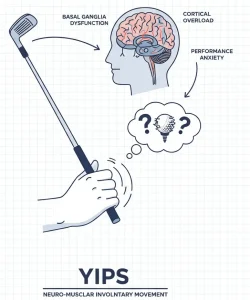
The yips are a movement disorder that causes a sudden loss of fine motor control during specific, well-learned activities. The condition is most commonly seen in athletes, especially golfers, baseball pitchers, cricket bowlers, and darts players. It typically affects precise movements such as putting, throwing, or releasing an object.
The yips may appear unexpectedly after years of normal performance. In some people, the condition is mild and temporary, while in others it can persist and significantly affect performance. The exact cause is not fully understood, and the yips may involve both psychological and neurological factors.
Symptoms
Symptoms of the yips usually occur only during a specific activity and not during everyday movements. Common symptoms include:
-
Sudden muscle jerks or spasms
-
Shaking or tremors during performance
-
Freezing or inability to complete a movement
-
Loss of timing or coordination
-
Unintended changes in grip or release
Symptoms often worsen under pressure and may improve during relaxed or non-competitive situations.
Causes
The causes of the yips are complex and may vary from person to person. Possible contributing factors include:
-
Performance anxiety or stress
-
Overuse of specific muscle groups
-
Disruption of motor control signals in the brain
-
Task-specific focal dystonia, a neurological movement disorder
In some cases, the yips may begin as stress-related and later develop into a neurological condition.
Risk factors
Several factors may increase the risk of developing the yips, including:
-
Long-term participation in sports requiring precision movements
-
High-pressure competitive environments
-
Repetitive practice of the same motion over many years
-
History of anxiety or perfectionism
-
Increasing age in certain sports
Experienced athletes appear to be more affected than beginners.
Complications
Although the yips are not physically harmful, they can have significant personal and professional consequences, such as:
-
Decline in athletic performance
-
Loss of confidence and self-esteem
-
Increased stress or anxiety
-
Avoidance of competition
-
Early retirement from sports in severe cases
The emotional impact may be greater than the physical symptoms.
Prevention
There is no proven way to fully prevent the yips, but certain strategies may help reduce risk or severity:
-
Managing stress through relaxation and mental training
-
Varying practice routines to limit repetitive strain
-
Taking regular breaks from intense training
-
Working with sports psychologists or performance coaches
-
Seeking early evaluation when symptoms first appear
Early intervention and a combined physical and psychological approach may help improve outcomes.
Request an appointment
Advertisement
