
Overview
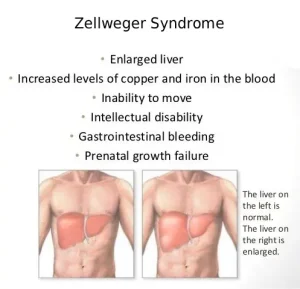
Zellweger syndrome is a rare, inherited genetic disorder that affects many parts of the body, especially the brain, liver and kidneys. It belongs to a group of conditions called Zellweger spectrum disorders, which result from problems with structures inside cells known as peroxisomes. Peroxisomes play a key role in breaking down fatty acids and toxins and in supporting normal brain development.
Zellweger syndrome is the most severe form of the spectrum. Symptoms usually appear at birth or within the first few months of life. The condition significantly affects growth and development and is often life-threatening in infancy.
There is currently no cure for Zellweger syndrome. Treatment focuses on supportive care to manage symptoms and improve quality of life.
Symptoms
Symptoms of Zellweger syndrome are typically present at birth and can vary in severity.
Common symptoms include:
-
Poor muscle tone, also called hypotonia
-
Feeding difficulties
-
Failure to thrive
-
Seizures
-
Hearing loss
-
Vision problems, including cataracts or retinal disease
-
Developmental delay
-
Distinct facial features, such as a flattened face or broad nasal bridge
Other signs may include:
-
Liver enlargement or liver dysfunction
-
Kidney cysts
-
Bone abnormalities
-
Breathing problems
Because the condition affects multiple organ systems, symptoms often progress over time.
Causes
Zellweger syndrome is caused by mutations in genes responsible for making peroxisomes. These genes are known as PEX genes. When these genes do not work properly, peroxisomes are absent or unable to function correctly.
As a result:
-
Very long-chain fatty acids build up in the body
-
Toxic substances are not broken down
-
Normal development of the brain and other organs is disrupted
Zellweger syndrome is inherited in an autosomal recessive pattern. This means a child must receive one faulty gene from each parent to develop the condition.
Risk factors
The primary risk factor for Zellweger syndrome is genetic inheritance.
Risk factors include:
-
Having parents who are both carriers of a PEX gene mutation
-
A family history of Zellweger syndrome or other Zellweger spectrum disorders
Parents who carry one faulty gene typically do not have symptoms but can pass the condition to their children.
Complications
Zellweger syndrome can lead to severe and life-limiting complications.
Possible complications include:
-
Progressive brain damage
-
Severe developmental disabilities
-
Chronic liver disease
-
Kidney failure
-
Recurrent infections
-
Respiratory failure
Because of these complications, many infants with Zellweger syndrome do not survive beyond the first year of life.
Prevention
There is no way to prevent Zellweger syndrome once conception has occurred. However, genetic counseling can help families understand their risk.
Preventive steps for at-risk families may include:
-
Carrier screening before pregnancy
-
Genetic counseling for couples with a family history of the condition
-
Prenatal genetic testing in future pregnancies
These measures can help parents make informed decisions and prepare for specialized medical care if needed.
Request an appointment
Advertisement
