
Overview
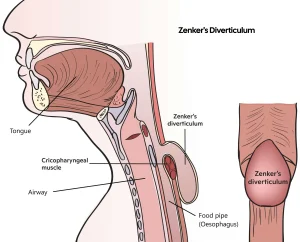
Zenker’s diverticulum is a condition in which a pouch forms in the upper part of the esophagus, just above the muscle that opens to allow food to pass into the stomach. The esophagus is the tube that carries food from the mouth to the stomach. This pouch develops when pressure builds up during swallowing, causing the inner lining of the esophagus to push outward through a weak area of muscle.
Zenker’s diverticulum is considered a type of esophageal diverticulum and most often affects older adults. The pouch can trap food, liquids and saliva, leading to swallowing problems and other symptoms. Treatment depends on the size of the diverticulum and the severity of symptoms. Mild cases may only need monitoring, while more severe cases often require surgery or endoscopic treatment.
Symptoms
Some people with Zenker’s diverticulum have no symptoms, especially in the early stages. When symptoms occur, they tend to worsen over time as the pouch enlarges.
Common symptoms include:
-
Difficulty swallowing, especially solid foods
-
Feeling of food stuck in the throat
-
Regurgitation of undigested food, sometimes hours after eating
-
Chronic cough
-
Hoarseness or voice changes
-
Bad breath caused by trapped food
Other possible symptoms include:
-
Choking or coughing during meals
-
Unexplained weight loss
-
Chest discomfort
-
Aspiration, when food or liquid enters the airway
Causes
Zenker’s diverticulum develops due to abnormal pressure during swallowing. The condition is linked to problems with the upper esophageal sphincter, a muscle that should relax to allow food to pass smoothly into the esophagus.
When this muscle does not relax properly:
-
Swallowing pressure increases
-
The inner lining of the esophagus bulges outward
-
A pouch gradually forms in a weak area of the esophageal wall
The exact reason why this muscle dysfunction occurs is not fully understood, but it is more common with aging.
Risk factors
Several factors increase the likelihood of developing Zenker’s diverticulum.
Risk factors include:
-
Older age, especially over 60 years
-
Male sex
-
Disorders affecting swallowing muscles
-
Long-standing swallowing difficulties
The condition is rare in younger individuals and uncommon in children.
Complications
If left untreated, Zenker’s diverticulum can lead to serious complications.
Possible complications include:
-
Aspiration pneumonia from inhaling food or liquids into the lungs
-
Malnutrition due to difficulty eating
-
Dehydration
-
Inflammation or infection of the diverticulum
-
Bleeding from the pouch
-
Rarely, cancer developing within the diverticulum
Early diagnosis and appropriate treatment can reduce the risk of these complications.
Prevention
There is no known way to prevent Zenker’s diverticulum. However, early evaluation of swallowing problems may help detect the condition before complications develop.
Helpful steps include:
-
Seeking medical attention for persistent difficulty swallowing
-
Managing conditions that affect swallowing muscles
-
Following treatment plans for esophageal or neurological disorders
Prompt treatment can improve symptoms and help prevent serious outcomes associated with the condition.
Advertisement
