
Overview
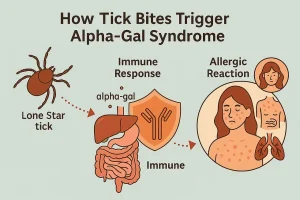
Alpha-gal syndrome is a type of food allergy that develops after a tick bite. In this condition, the immune system reacts to alpha-gal, a sugar molecule found in red meat and other products from mammals. Alpha-gal syndrome can be serious and may be life-threatening.
In the United States, the condition most often begins after a bite from the lone star tick. In other parts of the world—such as Europe, Australia, Asia, South Africa, and Central and South America—different tick species can cause the syndrome.
People with alpha-gal syndrome may develop allergic reactions after eating red meat such as beef, pork, or lamb. Reactions can also occur with other mammal-derived products, including dairy and gelatin. Because symptoms are often delayed by several hours, some people may have unexplained allergic or anaphylactic reactions without realizing alpha-gal syndrome is the cause.
There is no cure. The main treatment is avoiding foods and products that contain alpha-gal. Severe reactions require emergency treatment with epinephrine.
Symptoms
Symptoms of alpha-gal syndrome usually appear 2 to 6 hours after eating foods that contain alpha-gal. Reactions can range from mild to severe.
Common symptoms include:
-
Hives and itching
-
Swelling of the lips, face, throat, or eyelids
-
Wheezing or shortness of breath
-
Stomach pain, nausea, vomiting, or diarrhea
In some people, symptoms may lessen or disappear over time.
When to see a doctor
See a healthcare professional or an allergist if you experience allergy symptoms after eating, especially if symptoms begin several hours later.
Seek emergency medical care if you have symptoms of anaphylaxis, such as:
-
Trouble breathing
-
Fast, weak pulse
-
Dizziness or fainting
Causes
Most people in the U.S. develop alpha-gal syndrome after being bitten by a lone star tick. Ticks that cause this condition carry alpha-gal molecules. When they bite a human, alpha-gal enters the body and may trigger an immune response. Experts do not fully understand why some people develop severe reactions while others do not.
Risk factors
You may be at higher risk if you:
-
Live in or spend time in areas where alpha-gal–carrying ticks are common
-
Spend time outdoors in wooded or grassy areas
-
Have had multiple tick bites, which increases the risk
Complications
Alpha-gal syndrome can cause anaphylaxis, a severe and potentially fatal allergic reaction. Without prompt treatment, anaphylaxis can be deadly.
Symptoms may include:
-
Tight or narrowed airways
-
Swelling of the throat
-
Rapid heartbeat
-
Dizziness or loss of consciousness
Epinephrine (adrenaline), delivered using an auto-injector (such as EpiPen or Auvi-Q), is required for treatment, followed by emergency care.
Some people who experience repeated, unexplained anaphylaxis may have undiagnosed alpha-gal syndrome.
Reactions to medicines and vaccines
In rare cases, people with alpha-gal antibodies may react to certain medicines or vaccines, including the cancer drug cetuximab (Erbitux). Always inform your healthcare professional about alpha-gal syndrome before starting new medications or vaccines.
Prevention
The best way to prevent alpha-gal syndrome is to avoid tick bites. Helpful steps include:
-
Wear long sleeves, long pants tucked into socks, shoes, and hats in wooded or grassy areas
-
Stay on trails and avoid tall grass and bushes
-
Use insect repellents with 20% or more DEET on skin
-
Treat clothing with permethrin or use pretreated clothing
-
Check yourself, children, and pets for ticks after outdoor activities
-
Shower soon after coming indoors
-
Remove ticks promptly using fine-tipped tweezers, grasping close to the skin and pulling steadily
Preventing tick exposure significantly lowers the risk of developing alpha-gal syndrome.
Request an appointment
Advertisement
