
Overview
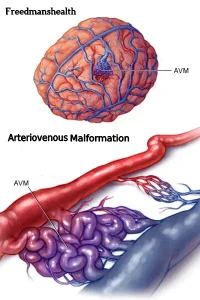
An arteriovenous malformation, also called an AVM, is a tangled group of abnormal blood vessels that creates irregular connections between arteries and veins. This abnormal connection disrupts normal blood flow and interferes with the delivery of oxygen to surrounding tissues. An AVM can occur anywhere in the body, but it most commonly affects the brain.
Normally, arteries carry oxygen-rich blood from the heart to the brain and other organs, while veins return oxygen-depleted blood back to the heart and lungs. In an AVM, blood flows directly from arteries into veins without passing through capillaries. As a result, nearby tissues may not receive enough oxygen.
The blood vessels within an AVM are often fragile and poorly formed. Over time, these vessels may weaken and rupture. If an AVM in the brain ruptures, it can cause bleeding in the brain, known as a hemorrhage. This bleeding may lead to a stroke, permanent brain damage or death.
The exact cause of arteriovenous malformations is not well understood. In rare cases, AVMs may run in families. Once diagnosed, especially in the brain, treatment may help reduce the risk of serious complications.
Symptoms
Symptoms of an arteriovenous malformation vary depending on its size and location. In some cases, an AVM causes no symptoms and is discovered during imaging tests done for another reason.
Often, the first noticeable symptoms appear after bleeding occurs. Symptoms related to bleeding or pressure on surrounding brain tissue may include:
-
Worsening difficulty with thinking or concentration
-
Headaches
-
Nausea and vomiting
-
Seizures
-
Loss of consciousness
Other possible symptoms include:
-
Muscle weakness, such as weakness in the legs
-
Loss of movement or sensation in part of the body, known as paralysis
-
Poor coordination that may cause difficulty walking
-
Trouble performing tasks that require planning or organization
-
Back pain
-
Dizziness
-
Vision problems, including loss of part of the visual field, difficulty moving the eyes or swelling of the optic nerve
-
Difficulty speaking or understanding language
-
Numbness, tingling or sudden pain
-
Memory loss or dementia
-
Seeing or hearing things that are not present, known as hallucinations
-
Confusion
Children and teenagers with an AVM may experience learning difficulties or behavior changes.
A rare type of AVM called a vein of Galen malformation usually causes symptoms at or shortly after birth. This type occurs deep within the brain. Signs may include:
-
Buildup of fluid in the brain that causes an abnormally large head
-
Swollen veins visible on the scalp
-
Seizures
-
Poor growth or failure to thrive
-
Congestive heart failure
When to see a doctor
Seek medical care if you experience symptoms that may suggest an arteriovenous malformation, such as persistent headaches, dizziness, vision changes, seizures or changes in thinking. Many AVMs are found during imaging tests such as CT scans or MRI scans performed for other medical concerns.
Early diagnosis may help reduce the risk of serious complications.
Causes
An arteriovenous malformation develops when arteries and veins connect in an abnormal way. The exact reason this occurs is not known. Experts believe that changes during blood vessel development before birth may play a role.
In most cases, AVMs are not inherited. However, certain genetic changes or rare inherited conditions may increase the likelihood of developing an AVM.
Risk factors
Most arteriovenous malformations occur without a known cause and are not inherited. Rarely, having a family history of an AVM may increase risk.
Certain hereditary conditions are associated with a higher risk of AVMs, including hereditary hemorrhagic telangiectasia, also known as Osler-Weber-Rendu syndrome.
Complications
The most common complications of an arteriovenous malformation are bleeding and seizures.
Bleeding occurs when fragile blood vessels within the AVM rupture. In the brain, this bleeding can cause permanent brain damage, stroke or death if not treated promptly.
Seizures may result from irritation or damage to brain tissue caused by the AVM or by bleeding. Other complications may include progressive neurological problems, depending on the size and location of the malformation.
Prevention
There is no known way to prevent most arteriovenous malformations because they usually develop before birth. However, early detection and appropriate treatment may help prevent complications.
Preventive strategies focus on reducing risks associated with AVMs and may include:
-
Regular medical follow-up after diagnosis
-
Managing blood pressure to reduce the risk of bleeding
-
Avoiding activities or medications that increase bleeding risk, if advised by a health care provider
-
Seeking immediate medical attention for new or worsening neurological symptoms
Early evaluation and ongoing monitoring can play an important role in reducing the risk of serious outcomes related to arteriovenous malformations.
Advertisement
