
Overview
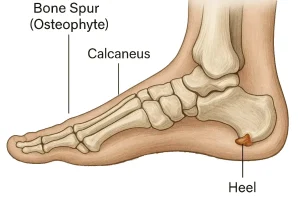
Bone spurs, also known as osteophytes, are smooth, bony growths that develop along the edges of bones. They commonly form where bones meet each other in joints or where ligaments and tendons attach to bones. Bone spurs often develop over time as part of the body’s response to ongoing joint stress or damage.
Many people with bone spurs have no symptoms and may not realize they have them until they appear on imaging tests. When symptoms do occur, they depend on the size and location of the spur and whether it presses on nearby nerves or tissues.
Symptoms
Bone spurs do not always cause symptoms. When they do, symptoms may include:
-
Pain or stiffness in the affected joint
-
Reduced range of motion
-
Swelling or tenderness around the joint
-
Pain that worsens with movement
-
Numbness, tingling, or weakness if a nerve is compressed
-
Neck or back pain when bone spurs affect the spine
Symptoms often develop gradually and may worsen over time.
Causes
Bone spurs usually form as a result of joint damage or chronic inflammation. The body attempts to repair the damage by creating extra bone, which can lead to spur formation.
Common causes include:
-
Osteoarthritis and other degenerative joint diseases
-
Repetitive stress or overuse of a joint
-
Aging-related wear and tear on joints
-
Injury to bones, ligaments, or tendons
-
Chronic inflammation of joints or surrounding tissues
Bone spurs are part of the degenerative process rather than a disease on their own.
Risk Factors
Several factors increase the likelihood of developing bone spurs. These include:
-
Advancing age
-
Osteoarthritis or other joint disorders
-
Obesity, which increases stress on joints
-
Poor posture or abnormal joint alignment
-
Repetitive movements related to work or sports
-
Previous joint injuries
These factors contribute to ongoing joint stress and bone changes.
Complications
While many bone spurs remain harmless, complications can occur if they interfere with nearby structures. Possible complications include:
-
Chronic joint pain
-
Limited mobility or stiffness
-
Nerve compression causing pain, numbness, or weakness
-
Spinal cord or nerve root compression when spurs occur in the spine
-
Difficulty performing daily activities
Proper management can help reduce discomfort and prevent progression.
Prevention
Bone spurs cannot always be prevented, especially those related to aging. However, certain measures may help reduce the risk or slow their development. Preventive strategies include:
-
Maintaining a healthy weight to reduce joint stress
-
Staying physically active with low-impact exercises
-
Using proper body mechanics during work and exercise
-
Managing joint conditions such as arthritis early
-
Avoiding repetitive strain and allowing adequate rest
Early attention to joint health can help lower the risk of bone spur formation and related symptoms.
Advertisement
