
Overview
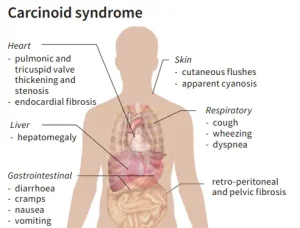
Carcinoid syndrome is a group of symptoms that occur in some people with neuroendocrine tumors, most commonly carcinoid tumors that originate in the gastrointestinal tract or lungs. These tumors produce and release hormones and other chemical substances, such as serotonin, into the bloodstream. Carcinoid syndrome usually develops when these substances bypass normal liver breakdown, often due to tumor spread to the liver. The condition can affect multiple organ systems and may progress over time if not managed appropriately.
Symptoms
Symptoms of carcinoid syndrome can vary in frequency and severity and may occur in episodes or persist chronically.
Common symptoms include:
-
Flushing of the face and upper chest
-
Chronic watery diarrhea
-
Abdominal cramping
-
Wheezing or shortness of breath
-
Rapid heartbeat
Other possible symptoms include:
-
Fatigue
-
Low blood pressure during flushing episodes
-
Skin changes such as telangiectasia
-
Unexplained weight loss
Causes
Carcinoid syndrome is caused by the release of hormones and vasoactive substances from neuroendocrine tumors into the bloodstream. Serotonin is the most commonly involved hormone, but others such as bradykinin and histamine may also contribute.
The syndrome typically occurs when:
-
Carcinoid tumors metastasize to the liver
-
Hormones enter the systemic circulation without being inactivated
Not all carcinoid tumors cause carcinoid syndrome, and many remain asymptomatic for long periods.
Risk Factors
Certain factors increase the likelihood of developing carcinoid syndrome in individuals with neuroendocrine tumors.
Key risk factors include:
-
Presence of metastatic carcinoid tumors
-
Tumors originating in the small intestine or lungs
-
Larger tumor burden
-
Delayed diagnosis of neuroendocrine tumors
Carcinoid syndrome is relatively uncommon compared to the overall number of carcinoid tumors.
Complications
If left untreated, carcinoid syndrome can lead to significant complications affecting long-term health.
Possible complications include:
-
Carcinoid heart disease, particularly damage to heart valves
-
Severe dehydration and electrolyte imbalances due to chronic diarrhea
-
Nutritional deficiencies
-
Carcinoid crisis, a sudden and life-threatening release of hormones
-
Progressive decline in quality of life
Early recognition and treatment are important to prevent irreversible organ damage.
Prevention
There is no guaranteed way to prevent carcinoid syndrome, but early detection and appropriate management of neuroendocrine tumors can reduce the risk and severity of symptoms.
Preventive approaches include:
-
Regular monitoring of known neuroendocrine tumors
-
Timely medical treatment to control hormone release
-
Avoiding triggers that provoke symptom episodes, such as stress or certain foods
-
Close follow-up with healthcare providers
Ongoing medical care plays a key role in managing carcinoid syndrome and reducing complications over time.
Advertisement
