
Overview
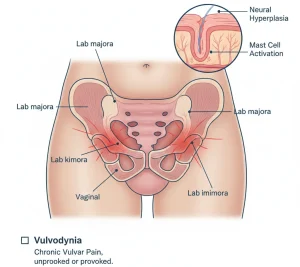
Vulvodynia is a chronic pain condition affecting the vulva, the external female genitalia, without an identifiable cause. The pain can be constant or intermittent and may be triggered by touch, pressure, or sexual activity.
Although the exact cause of vulvodynia is unknown, factors such as nerve irritation, inflammation, hormonal changes, or previous infections may contribute. The condition can significantly impact quality of life, sexual health, and emotional well-being.
Symptoms
Symptoms of vulvodynia vary among individuals but commonly include:
-
Burning, stinging, or raw sensation in the vulvar area
-
Itching or irritation
-
Pain during sexual intercourse (dyspareunia)
-
Soreness or discomfort while sitting, exercising, or wearing tight clothing
-
Redness or swelling in some cases (though the skin may appear normal)
Symptoms can be localized to a specific area or affect the entire vulva and may worsen over time if untreated.
Causes
The exact cause of vulvodynia is not fully understood, but several factors may contribute:
-
Nerve irritation or increased sensitivity of vulvar nerves
-
Chronic inflammation of vulvar tissues
-
Hormonal changes, such as low estrogen levels
-
Recurrent yeast or urinary tract infections
-
Muscle spasms of the pelvic floor
-
Genetic predisposition or altered pain perception
Vulvodynia is not caused by infection alone and is not contagious.
Risk Factors
Certain factors may increase the likelihood of developing vulvodynia:
-
History of chronic yeast or urinary tract infections
-
Hormonal changes, including menopause or postpartum period
-
Nerve injury or trauma to the pelvic area
-
Chronic pelvic pain syndromes
-
Family history of vulvar pain or heightened pain sensitivity
-
Stress or anxiety, which may exacerbate symptoms
Complications
Vulvodynia can lead to several physical and emotional complications:
-
Painful sexual intercourse, affecting intimacy and relationships
-
Anxiety, depression, or reduced quality of life
-
Avoidance of physical activity or sitting for long periods
-
Difficulty with daily activities due to persistent pain
-
Frustration or stress from delayed diagnosis or ineffective treatment
Prevention
There is no guaranteed way to prevent vulvodynia, but certain measures may help reduce risk or manage symptoms:
-
Practicing good vulvar hygiene without using harsh soaps or irritants
-
Wearing loose-fitting, breathable clothing
-
Avoiding prolonged sitting or pressure on the vulva
-
Managing stress and maintaining overall pelvic health
-
Seeking early medical evaluation for persistent vulvar pain or irritation
-
Pelvic floor physical therapy to prevent or reduce muscle tension
Early diagnosis and a multidisciplinary approach, including pain management, physical therapy, and lifestyle adjustments, can improve symptom control and quality of life for individuals with vulvodynia.
Request an appointment
Advertisement
