
Overview
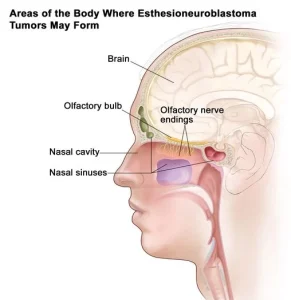
Esthesioneuroblastoma, also known as olfactory neuroblastoma, is a rare cancer that develops from the olfactory nerve cells responsible for the sense of smell. It originates in the upper part of the nasal cavity near the cribriform plate. This tumor can grow locally and may spread to nearby structures such as the sinuses, eyes, or brain. Because of its location and slow initial growth, diagnosis is often delayed.
Symptoms
Symptoms of esthesioneuroblastoma often resemble common nasal or sinus problems, especially in early stages. Common symptoms include:
-
Persistent nasal blockage or congestion, usually on one side
-
Frequent nosebleeds
-
Reduced or loss of sense of smell
-
Facial pain or pressure
-
Headaches
-
Watery eyes or vision changes in advanced cases
-
Facial swelling or numbness
Symptoms that persist or worsen over time should be medically evaluated.
Causes
The exact cause of esthesioneuroblastoma is not clearly understood. It develops when olfactory nerve cells begin to grow abnormally and form a tumor. There are no well-established lifestyle or environmental causes linked to this cancer.
Risk Factors
Clear risk factors for esthesioneuroblastoma are not well defined due to its rarity. However, certain factors may be associated:
-
Tumors occurring most commonly in adolescents and middle-aged adults
-
No strong gender preference
-
Possible genetic susceptibility in rare cases
Most individuals diagnosed do not have identifiable risk factors.
Complications
If not treated appropriately, esthesioneuroblastoma can lead to serious complications:
-
Spread to nearby sinuses, eye sockets, or brain
-
Regional lymph node involvement
-
Recurrence after treatment
-
Neurological symptoms due to brain involvement
-
Long-term effects on vision, smell, or facial function
Early diagnosis and specialized treatment improve outcomes.
Prevention
There is no known way to prevent esthesioneuroblastoma. However, early recognition and timely care can reduce complications:
-
Seeking medical evaluation for persistent nasal obstruction or nosebleeds
-
Regular follow-up after treatment to detect recurrence early
-
Prompt imaging and biopsy for unexplained nasal masses
-
Ongoing specialist care for rare head and neck tumors
Awareness of persistent nasal symptoms and early intervention play a key role in managing esthesioneuroblastoma effectively.
Advertisement
