
Overview
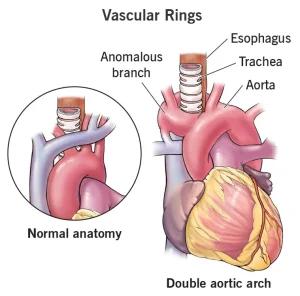
Vascular rings are rare congenital abnormalities of the aorta or its branches that form a ring around the trachea, esophagus, or both. This ring can compress the airway or food pipe, leading to breathing and swallowing difficulties. Vascular rings are present at birth, but symptoms may appear in infancy, childhood, or occasionally later in life.
The severity of symptoms depends on the type of vascular ring and the degree of compression. With timely diagnosis and appropriate treatment, most individuals experience significant improvement.
Symptoms
Symptoms of vascular rings are related to compression of the airway or esophagus and may vary in severity:
-
Noisy breathing or wheezing
-
Chronic cough
-
Stridor, especially in infants
-
Difficulty breathing, particularly during feeding or activity
-
Trouble swallowing solid foods
-
Frequent choking or gagging
-
Recurrent respiratory infections
-
Poor weight gain in infants
Symptoms may worsen during respiratory infections or when lying flat.
Causes
Vascular rings develop due to abnormal formation of the aortic arch and its branches during early fetal development. Instead of forming a normal single arch, the blood vessels encircle the trachea or esophagus.
Common anatomical causes include:
-
Double aortic arch
-
Right aortic arch with abnormal branching
-
Abnormal ligamentum arteriosum
-
Other rare aortic arch malformations
These abnormalities are not caused by lifestyle or environmental factors after birth.
Risk Factors
Vascular rings are congenital, and specific preventable risk factors are not well established. However, certain associations exist:
-
Congenital heart defects
-
Genetic or chromosomal abnormalities in some cases
-
Family history of congenital cardiovascular anomalies
Most cases occur sporadically without a clear inherited pattern.
Complications
If vascular rings are not recognized and treated, complications may occur:
-
Persistent breathing difficulties
-
Recurrent lung infections
-
Feeding problems and poor growth in children
-
Aspiration due to swallowing difficulties
-
Long-term airway damage in severe cases
Early intervention helps reduce the risk of long-term complications.
Prevention
There is no known way to prevent vascular rings because they develop before birth. However, early detection and management can prevent serious outcomes.
Preventive-focused care includes:
-
Prenatal imaging when congenital abnormalities are suspected
-
Early evaluation of infants with persistent breathing or feeding issues
-
Timely referral to specialists for diagnosis
-
Ongoing follow-up after treatment to monitor airway and swallowing function
Prompt diagnosis and appropriate treatment greatly improve quality of life and long-term outcomes.
Advertisement
