
Overview
Diagnosis
When a person is known or suspected to have been exposed to a high dose of radiation during an accident or attack, medical teams use several methods to estimate the absorbed radiation dose. Understanding this dose is crucial for predicting the severity of radiation sickness, guiding treatment decisions and determining the chances of survival. Important information includes details of the exposure, such as distance from the radiation source and duration of contact. The onset of vomiting can also help estimate the dose, as a shorter time between exposure and vomiting usually indicates a higher level of radiation.
Medical personnel may order frequent blood tests over several days to track changes in white blood cells and identify DNA damage in blood cells. These findings can show the degree of bone marrow injury. Devices such as dosimeters may provide dose measurements if they were exposed during the same radiation event. A survey meter, such as a Geiger counter, can help detect radioactive particles on the body. As part of the broader emergency response, identifying the type of radiation involved helps guide treatment decisions.
Treatment
Treatment for radiation sickness focuses on preventing further contamination, managing life-threatening injuries and reducing symptoms and pain. One of the first steps is decontamination, which involves removing external radioactive particles. Taking off clothing and shoes eliminates most surface contamination, and gentle washing with soap and water removes additional particles. This process prevents the spread of radioactive materials and reduces the risk of internal contamination through inhalation, swallowing or open wounds.
Treatment often includes addressing damage to the bone marrow. Protein-based medicines, such as granulocyte colony-stimulating factor, may help promote the growth of white blood cells and reduce the risk of infection. In severe cases, transfusions of red blood cells or platelets may be needed. Some treatments help reduce internal organ damage from specific radioactive materials:
-
Potassium iodide may prevent the thyroid from absorbing radioactive iodine if taken within a day of exposure.
-
Prussian blue binds to radioactive cesium and thallium so the body can eliminate them more quickly.
-
DTPA binds to radioactive metals like plutonium, americium and curium to help remove them through urine.
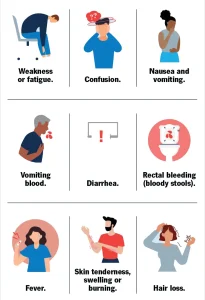
Supportive care may also be necessary to manage infections, headaches, fever, diarrhea, nausea, vomiting, dehydration, burns and sores. For people exposed to extremely high doses with little chance of recovery, end-of-life care focuses on controlling pain and other symptoms while offering psychological or spiritual support.
Advertisement
