
Overview
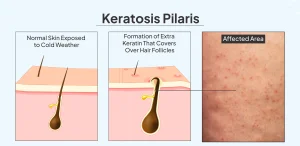
Diagnosis
Keratosis pilaris is typically diagnosed through a simple physical examination. A health care provider can usually identify the condition just by looking at the affected skin, and no additional tests are required.
Treatment
Keratosis pilaris often improves on its own over time. Until then, various products and treatments may help improve the appearance of the skin. If moisturizing and self-care measures do not provide relief, medicated creams may be recommended.
Treatment options include:
-
Creams to remove dead skin cells. Products containing alpha hydroxy acid, lactic acid, salicylic acid or urea help loosen and shed dead skin cells while softening dry skin. These topical exfoliants are available in prescription and nonprescription strengths. Depending on the formulation, they may cause mild stinging or irritation and are not advised for young children.
-
Creams to prevent plugged follicles. Topical retinoids, derived from vitamin A, help increase cell turnover and reduce blocked hair follicles. Examples include tretinoin and tazarotene. These products can dry or irritate the skin, and their use may need to be postponed during pregnancy or nursing.
Using medicated creams regularly can improve the appearance of the skin, but results typically fade if treatment is stopped. Even with consistent therapy, keratosis pilaris may persist for years.
Advertisement
