
Overview
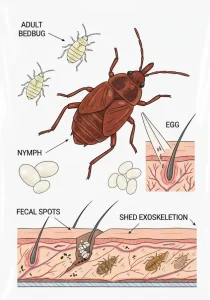
Bedbug bites often appear after waking up and may vary from person to person. Some people may have no visible reaction, while others develop noticeable skin symptoms.
Common symptoms include:
-
Itchy red welts or bumps on the skin
-
Bites often appearing in a line or cluster
-
Swelling or inflammation around the bite area
-
Burning or tingling sensation on the skin
-
Small blood spots on bed sheets or pillowcases
-
Dark or rust-colored stains from crushed bedbugs
In sensitive individuals, bites may cause significant itching or allergic reactions.
Causes
Bedbug infestations occur when the insects are unknowingly brought into a living space. They do not develop due to poor hygiene and can affect clean and well-maintained environments.
Common causes include:
-
Travel and staying in infested hotels or accommodations
-
Bringing secondhand furniture, mattresses, or clothing into the home
-
Bedbugs spreading between apartments through walls or shared spaces
-
Exposure to infested public places such as buses or trains
-
Guests or visitors unknowingly carrying bedbugs on luggage or clothing
Bedbugs hide during the day and come out at night to feed, making early detection difficult.
Risk factors
Certain situations increase the likelihood of encountering or spreading bedbugs.
Risk factors include:
-
Frequent travel or overnight stays outside the home
-
Living in multi-unit housing such as apartments or hostels
-
Purchasing used furniture or mattresses
-
High population density or shared sleeping spaces
-
Delayed detection of early infestation signs
Anyone can be affected, regardless of age, lifestyle, or cleanliness.
Complications
While bedbug bites are usually not dangerous, complications can occur in some individuals or in severe infestations.
Possible complications include:
-
Skin infections from excessive scratching
-
Allergic reactions causing severe swelling or blistering
-
Sleep deprivation due to nighttime itching and anxiety
-
Emotional stress, anxiety, or embarrassment
-
Financial burden from pest control treatments and replacement of infested items
Prompt identification and treatment can help reduce these complications.
Prevention
Preventing bedbug infestations focuses on awareness, inspection, and early action.
Helpful prevention measures include:
-
Inspect hotel beds, mattresses, and furniture when traveling
-
Keep luggage off beds and floors while staying away from home
-
Wash and dry travel clothing on high heat after returning home
-
Avoid bringing used furniture into the home without inspection
-
Seal cracks and crevices in walls and furniture
-
Use mattress and pillow encasements designed to block bedbugs
-
Act quickly if signs of bedbugs are noticed, seeking professional pest control if needed
Early detection and consistent preventive steps are key to controlling and avoiding bedbug infestations.
Advertisement
