
Overview
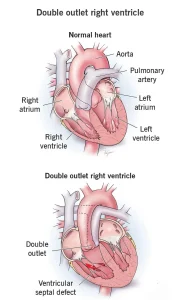
Double-outlet right ventricle is a rare congenital heart defect in which both major arteries of the heart, the aorta and the pulmonary artery, arise mainly or entirely from the right ventricle instead of one from each ventricle. This condition is present at birth and affects how oxygen-rich and oxygen-poor blood circulate through the body. The severity and clinical presentation vary depending on associated heart defects, especially the presence and position of a ventricular septal defect.
Symptoms
Symptoms of double-outlet right ventricle often appear in infancy, though the severity depends on blood flow patterns and associated abnormalities. Common symptoms include:
-
Bluish discoloration of the lips, skin, or nails due to low oxygen levels
-
Rapid or labored breathing
-
Poor feeding or difficulty gaining weight in infants
-
Excessive sweating, especially during feeding
-
Fatigue or low energy levels
-
Shortness of breath during activity in older children
Symptoms may worsen if pulmonary blood flow is reduced or if oxygen levels are significantly low.
Causes
Double-outlet right ventricle occurs due to abnormal development of the heart during early fetal growth. During normal development, the great arteries shift and align with their respective ventricles. In this condition, that process is disrupted, causing both arteries to connect to the right ventricle. The exact cause is not fully understood, but it is related to complex genetic and developmental factors rather than actions or exposures after birth.
Risk Factors
Several factors may increase the likelihood of congenital heart defects, including double-outlet right ventricle:
-
Family history of congenital heart disease
-
Genetic syndromes or chromosomal abnormalities
-
Maternal diabetes
-
Maternal infections during pregnancy
-
Exposure to certain medications or substances during early pregnancy
In many cases, no specific risk factor can be identified.
Complications
Without appropriate treatment, double-outlet right ventricle can lead to serious complications:
-
Chronic low oxygen levels in the blood
-
Heart failure due to inefficient blood circulation
-
Delayed growth and development in children
-
Recurrent respiratory infections
-
Abnormal heart rhythms
-
Reduced exercise tolerance later in life
Long-term outcomes depend on the type of defect and the success of surgical correction.
Prevention
There is no guaranteed way to prevent double-outlet right ventricle, as it develops before birth. However, certain steps may help reduce the overall risk of congenital heart defects:
-
Managing chronic medical conditions, such as diabetes, before and during pregnancy
-
Avoiding alcohol, tobacco, and non-prescribed medications during pregnancy
-
Ensuring adequate prenatal care and early screening
-
Seeking genetic counseling if there is a family history of congenital heart disease
Early diagnosis and timely surgical management play a key role in improving survival and quality of life for individuals with double-outlet right ventricle.
Advertisement
