
Overview
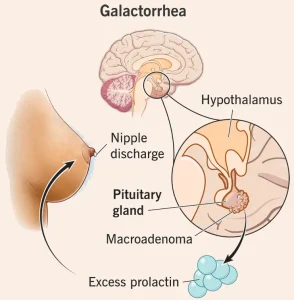
Galactorrhea is a condition characterized by the unexpected flow of milk or milk-like discharge from the nipples in individuals who are not breastfeeding or pregnant. It can occur in women, men, and rarely in children. Galactorrhea itself is not a disease but a symptom that often indicates an underlying hormonal imbalance, most commonly involving elevated levels of prolactin, the hormone responsible for milk production. The discharge may affect one or both breasts and can occur spontaneously or when the nipples are stimulated.
Symptoms
The primary symptom of galactorrhea is nipple discharge that resembles breast milk. Additional symptoms may vary depending on the underlying cause and can include:
-
White or clear nipple discharge unrelated to childbirth or nursing
-
Discharge from one or both nipples
-
Missed or irregular menstrual periods in women
-
Infertility or reduced libido
-
Headaches or vision problems, especially if related to pituitary disorders
-
Erectile dysfunction or breast enlargement in men
Causes
Galactorrhea is most often linked to hormonal disturbances, particularly excess prolactin. Common causes include:
-
Pituitary gland disorders, such as prolactin-secreting tumors
-
Certain medications, including antipsychotics, antidepressants, and blood pressure drugs
-
Hormonal imbalances involving estrogen or thyroid hormones
-
Hypothyroidism
-
Excessive breast or nipple stimulation
-
Chronic kidney disease or liver disease
-
Use of herbal supplements or substances that affect hormone levels
In some cases, no clear cause is identified, which is referred to as idiopathic galactorrhea.
Risk Factors
Several factors may increase the likelihood of developing galactorrhea, including:
-
Female sex, particularly during reproductive years
-
Use of medications that affect dopamine or prolactin levels
-
History of thyroid or pituitary disorders
-
High stress levels
-
Frequent breast stimulation or chest wall irritation
Complications
Galactorrhea itself is usually not dangerous, but untreated underlying causes may lead to complications. Possible complications include:
-
Infertility due to hormonal imbalance
-
Osteoporosis from prolonged low estrogen levels
-
Vision loss or neurological symptoms if a pituitary tumor is present
-
Emotional distress or anxiety related to unexplained breast discharge
Early evaluation helps reduce the risk of long-term complications.
Prevention
Not all cases of galactorrhea can be prevented, but certain measures may help lower the risk:
-
Avoid unnecessary nipple stimulation
-
Use medications only as prescribed and discuss side effects with a healthcare provider
-
Manage stress through healthy coping strategies
-
Seek timely treatment for thyroid or hormonal disorders
-
Schedule regular health checkups to monitor hormonal balance
Prompt medical attention for unusual nipple discharge can help identify the cause early and prevent related health issues.
Request an appointment
Advertisement
