
Overview
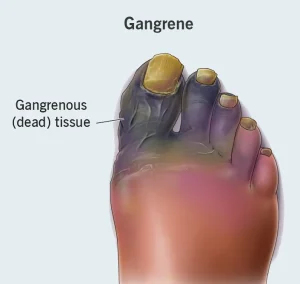
Gangrene is a serious and potentially life-threatening condition that occurs when body tissue dies due to a lack of blood supply, severe infection, or both. It most commonly affects the fingers, toes, feet, and hands but can also involve internal organs and muscles. Gangrene requires urgent medical attention, as it can spread rapidly and lead to severe complications if left untreated.
Symptoms
Symptoms of gangrene vary depending on the type and location of affected tissue. Common symptoms include:
-
Discoloration of the skin, ranging from pale to blue, purple, or black
-
Severe pain followed by numbness in the affected area
-
Swelling and tenderness
-
Blisters or sores that produce foul-smelling discharge
-
Coldness of the skin compared to surrounding areas
-
Fever and general weakness in cases involving infection
Causes
Gangrene develops when blood flow to a part of the body is significantly reduced or blocked, or when a severe infection destroys tissue. Common causes include:
-
Poor blood circulation due to conditions such as diabetes or atherosclerosis
-
Severe bacterial infections
-
Traumatic injuries, including burns or crush injuries
-
Frostbite or extreme cold exposure
-
Surgical complications affecting blood vessels
Different forms of gangrene may result from dry tissue death, infection-related tissue damage, or gas-producing bacteria.
Risk Factors
Certain conditions and lifestyle factors increase the risk of developing gangrene, including:
-
Diabetes, especially with poor blood sugar control
-
Peripheral artery disease
-
Smoking
-
Severe injuries or open wounds
-
Weakened immune system
-
Obesity
Complications
Gangrene can progress quickly and lead to serious complications if not treated promptly. Possible complications include:
-
Spread of infection to surrounding tissues or bloodstream
-
Sepsis, a life-threatening systemic response to infection
-
Loss of limb due to amputation
-
Organ failure in severe cases
Early diagnosis and treatment are critical to prevent life-threatening outcomes.
Prevention
While not all cases of gangrene can be prevented, certain measures may reduce risk:
-
Managing chronic conditions such as diabetes and vascular disease
-
Maintaining good hygiene and proper wound care
-
Avoiding smoking to improve blood circulation
-
Protecting the body from extreme cold and injuries
-
Seeking immediate medical attention for wounds that do not heal or show signs of infection
Prompt treatment of circulation problems and infections plays a key role in preventing gangrene.
Request an appointment
Advertisement
