
Overview
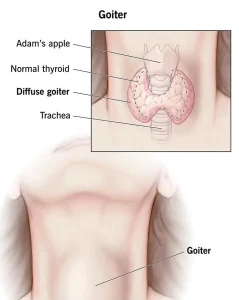
Goiter is an abnormal enlargement of the thyroid gland, a butterfly-shaped gland located at the base of the neck. The thyroid plays a key role in regulating metabolism through the production of hormones. A goiter can develop when the thyroid produces too much or too little hormone, or when the gland is stimulated to grow due to iodine deficiency or other factors. Goiters may be small and barely noticeable or large enough to cause visible swelling in the neck.
Symptoms
Symptoms of goiter vary depending on its size and the underlying thyroid condition. Many people have no symptoms other than neck swelling. When symptoms occur, they may include:
-
Visible swelling or lump at the base of the neck
-
Tightness or discomfort in the throat
-
Difficulty swallowing or breathing in large goiters
-
Hoarseness
-
Cough
-
Symptoms of hyperthyroidism or hypothyroidism, such as weight changes or fatigue
Small goiters may be detected only during routine examinations.
Causes
Goiter develops when the thyroid gland is stimulated to enlarge. Common causes include:
-
Iodine deficiency
-
Overactive thyroid or underactive thyroid
-
Autoimmune thyroid diseases such as Graves’ disease or Hashimoto’s thyroiditis
-
Thyroid nodules
-
Inflammation of the thyroid gland
-
Pregnancy-related hormonal changes
Iodine deficiency is a leading cause worldwide.
Risk Factors
Several factors increase the risk of developing goiter, including:
-
Insufficient iodine intake
-
Female sex
-
Age over 40
-
Pregnancy or menopause
-
Family history of thyroid disease
-
Exposure to radiation to the neck or chest
These factors can affect thyroid hormone production or gland growth.
Complications
Goiter itself may not cause serious problems, but complications can occur depending on size and cause. Possible complications include:
-
Compression of the airway or esophagus
-
Difficulty breathing or swallowing
-
Thyroid hormone imbalance
-
Cosmetic concerns affecting quality of life
Rarely, thyroid nodules within a goiter may be cancerous.
Prevention
Goiter can often be prevented by addressing its underlying causes:
-
Ensuring adequate iodine intake through diet or iodized salt
-
Regular screening for thyroid disorders in high-risk individuals
-
Prompt treatment of thyroid hormone imbalances
-
Avoiding unnecessary radiation exposure
Maintaining proper thyroid health and regular medical checkups can help reduce the risk of goiter and related complications.
Advertisement
