
Overview
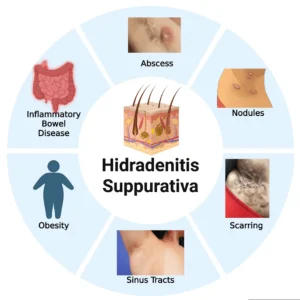
Hidradenitis Suppurativa (HS) is a chronic, inflammatory skin condition that causes painful lumps, abscesses, and tunnels under the skin. It most commonly affects areas where skin rubs together, such as the armpits, groin, buttocks, inner thighs, and under the breasts. The condition tends to recur and can progressively worsen over time without proper management.
HS develops when hair follicles become blocked and inflamed, leading to deep, tender nodules that may rupture and drain pus. Unlike common acne, hidradenitis suppurativa often forms interconnected sinus tracts beneath the skin and can result in significant scarring. The disease can have a major impact on quality of life due to pain, drainage, odor, and emotional distress.
Early diagnosis and treatment are important to reduce flare-ups, prevent complications, and improve long-term outcomes.
Symptoms
The symptoms of hidradenitis suppurativa vary in severity and often occur in cycles of flare-ups and remission.
Common symptoms include:
-
Painful, pea-sized lumps under the skin
-
Recurrent abscesses that may break open and drain pus
-
Blackheads appearing in pairs or small clusters
-
Tunnels under the skin connecting different lesions
-
Thick, rope-like scars after healing
-
Foul-smelling discharge from draining lesions
-
Persistent skin inflammation and tenderness
The affected areas typically include:
-
Armpits
-
Groin and inner thighs
-
Buttocks
-
Under the breasts
-
Around the anus
In early stages, individuals may notice a single painful lump. As the condition progresses, multiple lesions can form and spread.
Causes
The exact cause of hidradenitis suppurativa is not fully understood. However, it is believed to result from blockage and inflammation of hair follicles. It is not caused by poor hygiene or infection, and it is not contagious.
Factors involved in its development may include:
-
Follicular occlusion, where hair follicles become blocked
-
Abnormal immune system response
-
Hormonal influences
-
Genetic predisposition
Research suggests that inflammation plays a central role in the disease process, leading to tissue damage and scarring over time.
Risk Factors
Several factors increase the likelihood of developing hidradenitis suppurativa:
-
Age between puberty and 40 years
-
Female gender
-
Family history of HS
-
Obesity
-
Smoking
-
Hormonal imbalances
-
Conditions such as metabolic syndrome or inflammatory bowel disease
Symptoms often begin after puberty, suggesting a hormonal component. A positive family history indicates that genetics may play a role in susceptibility.
Complications
If left untreated or poorly controlled, hidradenitis suppurativa can lead to serious complications.
Possible complications include:
-
Severe scarring and skin thickening
-
Restricted movement due to scar tissue
-
Chronic pain
-
Secondary bacterial infections
-
Lymphedema, especially in advanced cases
-
Fistula formation near the anus
-
Squamous cell carcinoma in long-standing cases
-
Depression, anxiety, and social isolation
Chronic inflammation and repeated flare-ups may significantly affect both physical and emotional well-being.
Prevention
There is no guaranteed way to prevent hidradenitis suppurativa, but certain measures may help reduce flare-ups and manage symptoms.
Helpful strategies include:
-
Maintaining a healthy body weight
-
Quitting smoking
-
Wearing loose-fitting clothing to reduce friction
-
Keeping affected areas clean and dry
-
Avoiding harsh skin products that cause irritation
-
Managing stress levels
Early medical treatment can help prevent disease progression and reduce complications. Individuals experiencing recurrent painful lumps in areas where skin rubs together should consult a healthcare professional for proper evaluation and management.
Advertisement
