
Overview
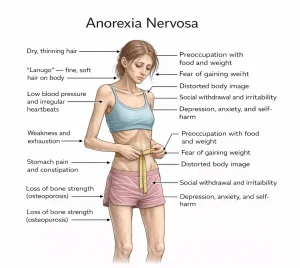
Anorexia nervosa, often called anorexia, is a serious and treatable eating disorder marked by very low body weight based on a person’s weight history. Although many people with anorexia appear very thin, some may not look underweight or may appear to have a larger body size. Despite appearance, they have lost a significant amount of weight or failed to gain weight needed for health.
People with anorexia usually have an intense fear of gaining weight and a distorted view of their body shape or size. To prevent weight gain or continue losing weight, they may severely limit how much or what types of food they eat. Control over weight and body shape often becomes a central focus, leading to behaviors that can seriously interfere with daily life.
Anorexia causes changes in the brain due to long-term malnutrition. Because the brain is affected, the behaviors linked to anorexia are not choices, and the illness is not simply about food or appearance. Without treatment, anorexia can lead to severe medical complications and has one of the highest death rates among mental illnesses, most often due to heart problems or suicide.
With proper treatment, many people with anorexia can return to a healthier weight, develop balanced eating habits and improve or reverse some of the physical and mental health complications.
Symptoms
Symptoms of anorexia nervosa reflect the effects of starvation on the body and brain. They may be difficult to recognize because low body weight looks different for each person, and many individuals try to hide their symptoms.
Physical symptoms may include:
-
Extreme weight loss or failure to gain expected weight for age
-
Fatigue, weakness and low energy
-
Dizziness or fainting
-
Irregular heart rhythms and low blood pressure
-
Feeling cold easily or intolerance to cold
-
Dry or yellowish skin and thinning or brittle hair
-
Soft, fine hair growing on the body
-
Constipation, stomach pain or bloating
-
Swelling of the arms or legs
-
Stress fractures or reduced bone density
-
Absence of menstrual periods in females not using hormonal contraception
Emotional and behavioral symptoms often include:
-
Skipping meals, refusing to eat or making excuses to avoid food
-
Strict dieting, fasting or eating only a small range of “safe” foods
-
Excessive focus on calories, nutrition or “clean” eating
-
Avoiding eating in front of others or lying about food intake
-
Excessive or compulsive exercise, even when injured
-
Fear of weight gain and frequent body checking
-
Irritability, low mood, anxiety or emotional flatness
-
Trouble sleeping and difficulty concentrating
-
Self-harm behaviors or thoughts of suicide
Some people with anorexia also experience binge-purge behaviors, which may involve episodes of overeating followed by vomiting or misuse of laxatives, diuretics or other substances.
Causes
The exact causes of anorexia nervosa are not fully understood. The condition is believed to develop from a combination of factors rather than a single cause.
Contributing factors may include:
-
Genetic influences that increase vulnerability to eating disorders
-
Certain personality traits, such as perfectionism or high sensitivity
-
Mental health conditions, including obsessive-compulsive traits or anxiety
-
Environmental and cultural pressures that emphasize thinness or body ideals
-
Social influences, including peer pressure and exposure to social media
Risk factors
Anorexia nervosa can affect people of all genders, ages, body types and backgrounds. However, certain factors may increase the risk.
Risk factors include:
-
Adolescence and young adulthood
-
A family history of eating disorders
-
Past experiences of weight-related teasing or bullying
-
Repeated dieting or weight cycling
-
Major life changes, such as moving, starting a new school or job, or loss of a loved one
Complications
Anorexia nervosa can affect nearly every organ system in the body. In severe cases, complications can be life-threatening, even in people who do not appear extremely underweight.
Possible complications include:
-
Irregular heart rhythms and heart failure
-
Electrolyte imbalances that can lead to sudden death
-
Anemia and other blood disorders
-
Bone loss and increased fracture risk
-
Muscle loss and weakness
-
Digestive problems, including constipation and nausea
-
Kidney damage
-
Hormonal changes, such as missed periods or low testosterone
Mental health complications may include depression, anxiety disorders, obsessive-compulsive disorder, substance misuse and increased risk of suicide.
Prevention
There is no guaranteed way to prevent anorexia nervosa. Early recognition and intervention offer the best chance for recovery and reduced complications.
Helpful prevention strategies may include:
-
Encouraging balanced eating and a healthy relationship with food
-
Addressing body image concerns early, especially in children and teens
-
Avoiding weight-based criticism or praise
-
Seeking professional help for early signs of disordered eating
-
Promoting mental health awareness and emotional support
Healthcare professionals can play an important role by identifying early warning signs during routine medical visits and guiding individuals and families toward appropriate care.
Advertisement
