
Overview
Diagnosis
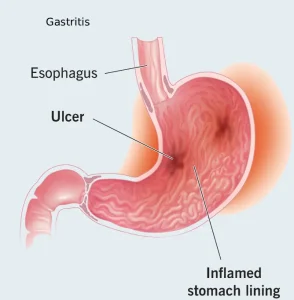
A healthcare professional may suspect gastritis after reviewing your medical history and performing a physical examination. To identify the exact cause, several diagnostic tests may be recommended.
Common tests used to diagnose gastritis include:
-
Tests for H. pylori
Your healthcare professional may suggest a stool test or a breath test to check for Helicobacter pylori infection.
In a breath test, you drink a clear, tasteless liquid containing a small amount of radioactive carbon. If H. pylori is present, it breaks down the liquid in your stomach, releasing carbon that can be detected in your breath sample. -
Endoscopy
Endoscopy allows direct examination of the digestive tract using a long, flexible tube with a small camera at the end, called an endoscope. The tube is passed through the throat into the esophagus, stomach, and small intestine. This helps identify inflammation or other abnormalities.
Depending on age and medical history, endoscopy may be recommended as the first diagnostic step instead of H. pylori testing. If any suspicious areas are seen, a small tissue sample (biopsy) can be taken for lab analysis to check for inflammation or infection. -
X-ray of the upper digestive system (barium swallow)
X-rays can provide images of the esophagus, stomach, and small intestine to detect ulcers or other abnormalities. Before the test, you may be asked to drink a barium-containing liquid that coats the digestive tract, making ulcers or irritation easier to see on X-ray images.
Treatment
Treatment for gastritis depends on the cause. Acute gastritis caused by nonsteroidal anti-inflammatory drugs (NSAIDs) or alcohol often improves once these substances are discontinued.
Medications commonly used to treat gastritis include:
-
Antibiotics to eliminate H. pylori
When H. pylori infection is present, a combination of antibiotics is prescribed for 7 to 14 days. Treatment may also include medicine to reduce stomach acid. After completing therapy, your healthcare professional may retest to ensure the infection is cleared. -
Medicines that block acid production and promote healing (proton pump inhibitors)
Proton pump inhibitors reduce acid levels by blocking certain cell functions responsible for acid production. These medicines can be prescribed or purchased over the counter.
Long-term or high-dose use may increase the risk of bone fractures. Your healthcare professional may suggest calcium supplementation if needed. -
Medicines to reduce acid production (acid blockers)
Also known as histamine blockers, these medicines lower the amount of acid released into the digestive tract. This helps relieve pain and supports healing. Acid blockers are available both by prescription and over the counter. -
Medicines that neutralize stomach acid (antacids)
Antacids quickly relieve pain by neutralizing existing stomach acid. They are usually used for short-term symptom control rather than long-term treatment. Some may cause constipation or diarrhea depending on their ingredients. Proton pump inhibitors and acid blockers generally provide more effective, sustained relief with fewer side effects.
Advertisement
