
Overview
Diagnosis
An eye care professional can diagnose glaucoma through a comprehensive eye exam and a review of your medical history. Tests that may be conducted include:
-
Measuring intraocular pressure using tonometry.
-
Evaluating the optic nerve with a dilated eye exam and imaging tests.
-
Checking for vision loss through a visual field test.
-
Measuring corneal thickness using pachymetry.
-
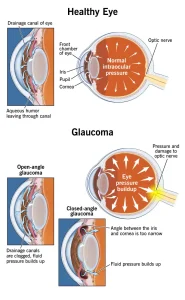
Inspecting the drainage angle of the eye through gonioscopy.
Treatment
Glaucoma causes irreversible eye damage, but treatment and regular checkups can help slow or prevent further vision loss, especially if detected early. Treatment focuses on lowering intraocular pressure and may include eye drops, oral medications, laser treatments, or surgery.
Eye drops
Eye drops are often the first treatment option. They may work by increasing fluid drainage or reducing fluid production in the eye. Common types include:
-
Prostaglandins: Increase fluid outflow. Examples: latanoprost, travoprost, bimatoprost. Side effects: eye redness, stinging, darkening of iris or eyelash pigmentation. Usually prescribed once daily.
-
Beta blockers: Reduce fluid production. Examples: timolol, betaxolol. Side effects: slow heart rate, low blood pressure, fatigue. Prescribed once or twice daily.
-
Alpha-adrenergic agonists: Reduce fluid production and increase outflow. Examples: apraclonidine, brimonidine. Side effects: high blood pressure, fatigue, dry mouth. Prescribed 2–3 times daily.
-
Carbonic anhydrase inhibitors: Reduce fluid production. Examples: dorzolamide, brinzolamide. Side effects: metallic taste, tingling in fingers and toes. Prescribed 2–3 times daily.
-
Rho kinase inhibitors: Lower eye pressure by affecting fluid regulation. Example: netarsudil. Side effects: eye redness, discomfort. Once-daily use.
-
Miotic agents: Increase fluid outflow. Example: pilocarpine. Side effects: headache, eye pain, smaller pupils. Used up to 4 times daily, less commonly prescribed.
To minimize systemic side effects, keep eyes closed for 1–2 minutes after instilling drops and press lightly on the tear duct near the nose. Wait at least 5 minutes between different eye drops.
Oral medications
If eye drops are insufficient, an oral carbonic anhydrase inhibitor may be prescribed. Side effects can include frequent urination, tingling, stomach upset, depression, and kidney stones.
Surgery and other therapies
Surgical and laser options help improve fluid drainage and lower eye pressure:
-
Laser trabeculoplasty: Improves drainage in the eye’s trabecular meshwork. Effects may take a few weeks.
-
Filtering surgery (trabeculectomy): Creates a new pathway for fluid to leave the eye.
-
Drainage tubes: Small tubes inserted to drain excess fluid.
-
Minimally invasive glaucoma surgery (MIGS): Lower-risk procedures often combined with cataract surgery.
Acute angle-closure glaucoma
This is a medical emergency requiring urgent treatment. Procedures may include:
-
Laser peripheral iridotomy: Creates a small hole in the iris to allow fluid flow and relieve pressure.
-
Medications to quickly lower eye pressure before surgery.
Regular follow-up is necessary, as additional treatments may be required if eye pressure rises or vision changes occur.
Advertisement
