
Overview
Diagnosis
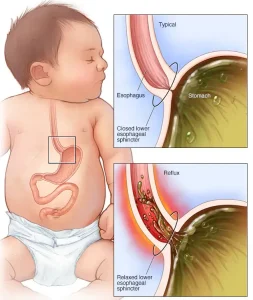
Infant reflux is often diagnosed through a physical exam and a review of the baby’s symptoms. If the baby is growing well and appears comfortable, further tests are usually not needed. In certain cases, additional tests may be recommended to rule out other conditions or complications.
Possible diagnostic tests may include:
-
Ultrasound to check for pyloric stenosis
-
Lab tests, such as blood or urine tests, to look for causes of vomiting or poor weight gain
-
Esophageal pH monitoring to measure acidity levels in the esophagus using a thin tube connected to a monitoring device
-
X-rays to identify blockages or digestive tract issues, often done after the baby drinks a barium contrast liquid
-
Upper endoscopy to visually examine the upper digestive tract and collect tissue samples, usually performed under general anesthesia in infants
Treatment
Most babies with reflux improve as their digestive systems develop. Simple changes in feeding practices often help reduce symptoms and support healthy growth.
Treatment approaches may include:
-
Adjusting feeding amounts and frequency to reduce reflux episodes
-
Trying different feeding positions or keeping the baby upright after feeding
Medicines may be recommended if reflux is causing complications, such as:
-
Poor weight gain despite feeding changes
-
Feeding refusal
-
Irritation or swelling of the esophagus
-
Chronic asthma symptoms
Acid-blocking medicines sometimes used include cimetidine, famotidine and omeprazole magnesium. These may be prescribed for several weeks or months if needed.
Surgery is rarely required and is considered only when reflux causes severe breathing issues or prevents healthy weight gain. The procedure tightens the lower esophageal sphincter to stop stomach acid from flowing back into the esophagus.
Advertisement
