
Overview
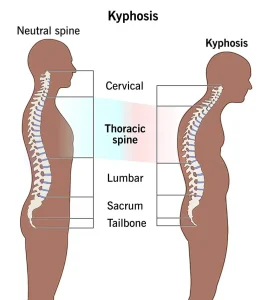
Diagnosis
Diagnosis of kyphosis typically begins with a detailed physical examination. Your healthcare professional may ask you to bend forward at the waist to better view the curve of your spine. A neurological exam may also be performed to assess reflexes, sensation, and muscle strength.
Several tests may be ordered to confirm the cause and severity of kyphosis:
-
X-rays or CT scans to measure spinal curvature and detect vertebral deformities
-
MRI to identify recent fractures or soft tissue issues
-
Nerve tests when numbness, tingling, or muscle weakness is present
-
Bone density tests to evaluate bone strength and detect low-density bone that may increase fracture risk
These tests help determine the underlying condition and guide the most appropriate treatment plan.
Treatment
Treatment for kyphosis depends on the type, cause, and severity of the spinal curvature. Your healthcare professional may recommend medicines to manage symptoms or address contributing conditions. Pain relievers are often used first, while osteoporosis medicines may help strengthen bones and prevent additional compression fractures.
Therapy may also play an important role. Stretching and strengthening exercises can improve spinal flexibility and reduce discomfort. For growing children with Scheuermann’s disease, wearing a brace during growth spurts may slow the progression of the curve.
Surgical or procedural options are considered when kyphosis is severe or causing significant symptoms. In rare cases, when the spinal cord or nerves are compressed, spinal fusion surgery may be recommended. This procedure uses rods and screws to hold the spine in a corrected position. Most compression fractures related to kyphosis are treated without surgery.
Advertisement
