
Overview
Diagnosis
Diagnosis of undifferentiated pleomorphic sarcoma begins with a review of symptoms and a physical examination. This cancer is typically diagnosed after ruling out other possible cancer types.
Tests and procedures that may be performed include:
-
Physical exam: Your healthcare provider will ask about your symptoms, when they began, and how they have changed. The affected area will be examined to determine the size, depth, and connection to nearby tissues. The doctor may also check for swelling or nerve damage.
-
Imaging tests: X-rays, CT scans, MRI, and PET scans may be used to create detailed images of the affected area and assess the extent of the cancer.
-
Biopsy: A tissue sample from the tumor is collected and analyzed in a laboratory to confirm the diagnosis. Depending on the case, the biopsy may be done using a needle or during surgery.
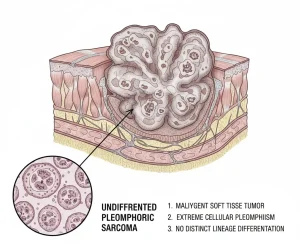
Pathologists examine the biopsy sample to determine the type of cells and how aggressive they appear. This helps rule out other cancer types and guides treatment planning.
Because the biopsy must be performed in a way that doesn’t interfere with future surgery, it is important to have the procedure done by a team with experience in treating soft tissue sarcomas.
Treatment
Treatment for undifferentiated pleomorphic sarcoma usually involves a combination of surgery, radiation therapy, and drug-based treatments such as chemotherapy, targeted therapy, or immunotherapy. The treatment plan depends on the size, location, and spread of the cancer.
Surgery
Surgery is the primary treatment and aims to remove the cancer completely along with a margin of healthy tissue.
-
When possible, surgeons use limb-sparing techniques for tumors in the arms or legs.
-
In rare cases, amputation may be necessary.
-
Radiation or chemotherapy may be given before surgery to shrink the tumor and make removal easier.
Radiation therapy
Radiation therapy uses high-energy beams, such as X-rays or protons, to destroy cancer cells. It can be used:
-
Before surgery to shrink the tumor.
-
After surgery to destroy any remaining cancer cells.
-
During surgery (Intraoperative radiation therapy or IORT) to target the area where the tumor was removed, especially if complete removal is difficult.
Chemotherapy
Chemotherapy uses drugs to kill cancer cells and may be given by mouth, intravenously, or both. It is most often used when the cancer has spread or returned after treatment. In some cases, it is used before surgery to shrink the tumor or combined with radiation for better results.
Targeted drug therapy
Targeted therapy works by blocking specific genetic changes in cancer cells that help them grow. Some targeted drugs are combined with chemotherapy. Before using targeted therapy, doctors may test cancer cells for specific mutations to determine if the treatment will be effective.
Immunotherapy
Immunotherapy helps the immune system recognize and attack cancer cells. It is usually used for advanced cases of undifferentiated pleomorphic sarcoma where other treatments are not effective.
Early diagnosis and a multidisciplinary treatment approach improve the chances of successful management of undifferentiated pleomorphic sarcoma.
Advertisement
