
Overview
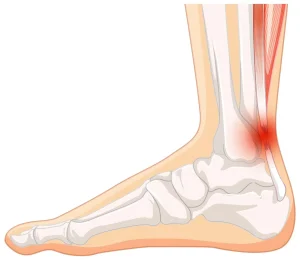
An Achilles tendon rupture is a serious injury that affects the back of the lower leg. It most commonly occurs in people who participate in recreational sports, though it can happen to anyone. The injury involves the Achilles tendon, a strong fibrous cord that connects the calf muscles to the heel bone and plays a key role in walking, running, and jumping.
A rupture can occur when the tendon is overstretched, causing it to tear either partially or completely. When this happens, a person may hear or feel a sudden pop, followed by sharp pain in the ankle or lower leg. This injury often makes it difficult or impossible to walk normally.
Treatment options for an Achilles tendon rupture include both surgical and nonsurgical approaches. While surgery is commonly used to repair the torn tendon, many people recover well with nonsurgical treatment, depending on the severity of the injury and individual health factors.
Symptoms
Most people with an Achilles tendon rupture experience sudden and noticeable symptoms at the time of injury, although mild cases may cause fewer signs.
Common symptoms include:
-
A sensation similar to being kicked or struck in the calf
-
Sudden pain, which may be severe, along with swelling near the heel
-
Difficulty or inability to bend the foot downward or push off while walking
-
Inability to stand on the toes of the injured leg
-
A popping or snapping sound when the injury occurs
Symptoms usually interfere with walking and weight-bearing activities. Immediate medical evaluation is important, especially if walking becomes difficult after the injury.
Causes
The Achilles tendon allows the foot to point downward, supports standing on the toes, and helps push the body forward during walking or running. Because of its constant use, the tendon is exposed to repeated stress.
Ruptures most often occur in a section of the tendon located about 2.5 inches above where it attaches to the heel bone. This area has limited blood supply, which can weaken the tendon and reduce its ability to heal.
A rupture is usually caused by a sudden increase in stress placed on the tendon. Common causes include:
-
Rapid increases in the intensity or frequency of sports activities, especially those involving jumping or sudden movements
-
Falling from a height
-
Stepping awkwardly into a hole or uneven surface
These sudden forces can overwhelm the tendon, leading to a tear.
Risk factors
Several factors can increase the likelihood of an Achilles tendon rupture:
-
Age, with the highest risk occurring between 30 and 40 years
-
Male sex, as men are significantly more likely to experience this injury
-
Participation in recreational sports that involve running, jumping, and quick starts and stops, such as basketball, soccer, or tennis
-
Steroid injections near the ankle, which can weaken nearby tendons
-
Use of certain antibiotics, particularly fluoroquinolones like ciprofloxacin or levofloxacin
-
Obesity, which places additional strain on the tendon
Having one or more of these risk factors can make the tendon more vulnerable to injury.
Complications
An Achilles tendon rupture can lead to long-term complications if not treated properly. These may include ongoing weakness in the affected leg, reduced range of motion, and difficulty returning to previous levels of physical activity. In some cases, the tendon may heal improperly, increasing the risk of re-injury. Early diagnosis, appropriate treatment, and proper rehabilitation are important to reduce the risk of lasting complications and support a full recovery.
Advertisement
