
Overview
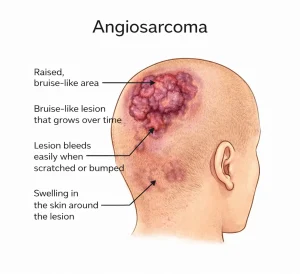
Angiosarcoma is a rare and aggressive type of cancer that forms in the lining of blood vessels and lymph vessels. Lymph vessels are part of the immune system and help remove bacteria, viruses and waste products from the body.
Angiosarcoma can develop anywhere in the body. However, it most commonly affects the skin of the head and neck, especially the scalp. In rare cases, it may develop in the skin of other areas, such as the breast, or in deeper tissues, including organs like the liver or the heart. Angiosarcoma can also occur in areas of the body that were treated with radiation therapy in the past.
When angiosarcoma affects the skin, it often appears as a bruise-like area that gradually grows or changes over time. Treatment depends on the location and extent of the cancer and may include surgery, radiation therapy and chemotherapy.
Symptoms
Signs and symptoms of angiosarcoma vary depending on where the cancer develops.
Angiosarcoma that affects the skin most often occurs on the scalp or face. Symptoms may include:
-
A raised area of skin that resembles a bruise
-
A bruise-like lesion that grows or spreads over time
-
A lesion that bleeds easily when scratched or injured
-
Swelling of the skin around the affected area
When angiosarcoma affects internal organs, such as the liver or heart, symptoms may include pain or discomfort. Other symptoms depend on which organ is involved and how advanced the cancer is.
When to see a doctor
Make an appointment with a healthcare professional if you notice any persistent or unexplained skin changes, swelling or symptoms that concern you.
Causes
The exact cause of most angiosarcomas is not known. Angiosarcoma begins when cells lining the blood vessels or lymph vessels develop changes in their DNA.
DNA contains instructions that control how cells grow and function. In angiosarcoma, these genetic changes cause cells to grow and divide rapidly and to survive longer than normal cells. As a result, abnormal cells build up and form a tumor.
Over time, the cancer cells can grow beyond the original blood or lymph vessel, invade nearby healthy tissue, and spread to other parts of the body.
Risk factors
Several factors may increase the risk of developing angiosarcoma:
-
Radiation therapy received for cancer or other medical conditions
-
Long-term swelling caused by damage to the lymphatic system, known as lymphedema
-
Exposure to certain chemicals, particularly vinyl chloride and arsenic, which are linked to liver angiosarcoma
-
Certain inherited genetic syndromes, including neurofibromatosis, Maffucci syndrome and Klippel-Trenaunay syndrome
-
Inherited gene changes such as BRCA1 and BRCA2
This content is SEO-friendly and ready to paste into WordPress or ACF fields, follows a standard medical blog post format, uses only H4 headings, includes bullet lists only where they add clarity, and matches the length and structure of the reference content.
Advertisement
