
Overview
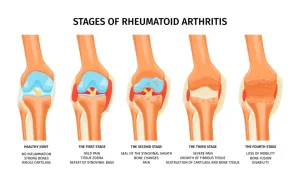
Arthritis refers to swelling and tenderness in one or more joints. The most common symptoms are joint pain and stiffness, which often worsen with age. There are many forms of arthritis, but the two most common types are osteoarthritis and rheumatoid arthritis.
Osteoarthritis is a degenerative joint condition that occurs when cartilage breaks down over time. Cartilage is the smooth, slippery tissue that covers the ends of bones where they meet to form a joint. As this cartilage wears away, bones may begin to rub against each other, causing pain and reduced movement.
Rheumatoid arthritis is an autoimmune disease. In this condition, the immune system mistakenly attacks the joints, starting with the joint lining. This leads to inflammation, swelling and, over time, damage to the joint structure.
Other types of arthritis exist as well. Gout occurs when uric acid crystals build up in the joints. Some forms of arthritis are linked to infections or underlying diseases such as psoriasis or lupus.
Treatment options vary depending on the type of arthritis. The main goals of treatment are to reduce pain, control inflammation and improve overall quality of life.
Symptoms
Symptoms of arthritis mainly affect the joints and can vary based on the type and severity of the condition.
Common signs and symptoms may include:
-
Joint pain
-
Stiffness, especially in the morning or after inactivity
-
Swelling around the joints
-
Redness or warmth over the joint
-
Reduced range of motion
Symptoms may develop gradually or appear suddenly, and they can range from mild to severe.
Causes
Different types of arthritis have different causes. The two most common forms, osteoarthritis and rheumatoid arthritis, affect joints in distinct ways.
Osteoarthritis develops due to gradual wear and tear of joint cartilage. Over time, the protective cartilage covering the ends of bones becomes damaged or worn away. This can cause bones to rub together, leading to pain, stiffness and limited movement. Joint injury or infection can speed up this process. Osteoarthritis may also cause changes in the bones and weakening of connective tissues that support the joint. In advanced cases, the joint lining can become inflamed and swollen.
Rheumatoid arthritis occurs when the immune system attacks the synovial membrane, which is the lining of the joint capsule. This membrane becomes inflamed and thickened, eventually damaging cartilage and bone within the joint. Unlike osteoarthritis, rheumatoid arthritis is not caused by wear and tear but by an abnormal immune response.
Risk factors
Several factors can increase the likelihood of developing arthritis.
These risk factors include:
-
Family history of arthritis or related conditions
-
Increasing age
-
Sex, with women being more likely to develop rheumatoid arthritis and men more likely to develop gout
-
Previous joint injuries, such as those from sports or accidents
-
Obesity, which places extra stress on weight-bearing joints like the knees, hips and spine
Having one or more risk factors does not guarantee arthritis, but it may increase susceptibility.
Complications
Severe or long-standing arthritis can lead to complications that affect daily life.
Arthritis involving the hands or arms can make everyday tasks such as dressing, writing or cooking difficult. Arthritis in weight-bearing joints may interfere with walking, standing or maintaining proper posture.
Over time, affected joints may lose their normal shape or alignment. In some cases, joint deformities and permanent loss of function can develop, especially if the condition is not managed effectively.
Prevention
Not all types of arthritis can be prevented, but certain steps may help reduce the risk or slow disease progression.
Preventive measures may include:
-
Maintaining a healthy body weight to reduce stress on joints
-
Protecting joints from injury during physical activity
-
Staying physically active to maintain joint flexibility and strength
-
Managing underlying health conditions that may contribute to arthritis
Early diagnosis and appropriate treatment play an important role in preventing complications and preserving joint function.
Advertisement
