
Overview
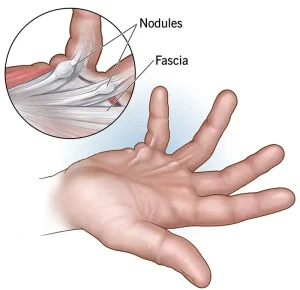
Dupuytren contracture is a hand condition in which the connective tissue beneath the skin of the palm gradually thickens and tightens. Over time, this can cause one or more fingers, most commonly the ring and little fingers, to bend toward the palm and become difficult to straighten. The condition progresses slowly and is usually painless but can affect hand function.
Symptoms
Symptoms often develop gradually and may worsen over years:
-
Thickened nodules or lumps in the palm
-
Tight cords of tissue under the skin
-
Fingers bending toward the palm
-
Difficulty straightening affected fingers
-
Reduced hand flexibility
-
Problems gripping objects or placing the hand flat
Causes
The exact cause of Dupuytren contracture is not fully understood:
-
Abnormal thickening of connective tissue in the palm
-
Genetic factors playing a significant role
-
Changes in collagen structure
-
Progressive shortening of fibrous tissue
-
No clear link to hand injury or overuse
Risk Factors
Several factors increase the likelihood of developing Dupuytren contracture:
-
Family history of the condition
-
Increasing age
-
Male sex
-
Northern European ancestry
-
Diabetes
-
Smoking
-
Excessive alcohol use
Complications
As the condition progresses, it may lead to:
-
Permanent finger deformity
-
Reduced hand strength
-
Difficulty performing daily tasks
-
Loss of hand function
-
Recurrence even after treatment
-
Emotional or occupational limitations
Prevention
There is no proven way to prevent Dupuytren contracture, but early management may help limit progression:
-
Monitoring early hand changes
-
Seeking medical evaluation for palm nodules
-
Managing underlying conditions such as diabetes
-
Avoiding smoking and excessive alcohol use
-
Performing hand exercises as advised by a healthcare provider
Advertisement
