
Overview
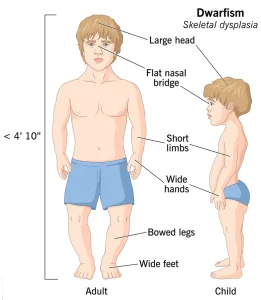
Dwarfism is a medical condition characterized by significantly shorter stature than average, typically defined as an adult height of 4 feet 10 inches or less. It results from genetic or medical conditions that affect bone growth, hormone production, or overall development. Dwarfism can be proportionate, where the body parts are in correct proportion, or disproportionate, where some body parts are shorter than others.
Symptoms
Symptoms vary depending on the underlying cause and type of dwarfism:
-
Short stature noticeable in childhood
-
Delayed growth and development
-
Shortened arms or legs
-
Disproportion between head, trunk, and limbs
-
Limited range of motion in joints
-
Curvature of the spine
-
Frequent ear infections
-
Breathing difficulties in some cases
-
Delayed puberty in certain forms
Causes
Dwarfism occurs due to conditions that interfere with normal bone or body growth:
-
Genetic mutations affecting bone development
-
Achondroplasia, the most common cause
-
Growth hormone deficiency
-
Turner syndrome
-
Skeletal dysplasias
-
Chronic kidney disease affecting growth
-
Poor nutrition or chronic illness during childhood
-
Metabolic or endocrine disorders
Risk Factors
Factors that increase the likelihood of dwarfism include:
-
Family history of genetic growth disorders
-
Genetic mutations occurring spontaneously
-
Hormonal imbalances in childhood
-
Certain chromosomal abnormalities
-
Long-term untreated medical conditions affecting growth
-
Poor prenatal health or complications
Complications
Dwarfism may be associated with various physical and medical complications:
-
Joint pain and arthritis
-
Spinal stenosis
-
Frequent ear infections and hearing loss
-
Breathing problems
-
Obesity due to limited mobility
-
Neurological complications
-
Social and psychological challenges
-
Reduced independence in daily activities
Prevention
Not all types of dwarfism can be prevented, but some measures may reduce risk or improve outcomes:
-
Genetic counseling for families with a history of dwarfism
-
Early diagnosis and treatment of growth hormone deficiencies
-
Regular monitoring of child growth patterns
-
Timely management of chronic childhood illnesses
-
Adequate prenatal care
-
Ongoing medical follow-up to manage complications
Advertisement
