
Overview
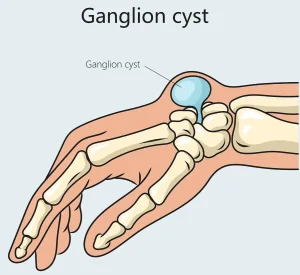
A ganglion cyst is a noncancerous, fluid-filled lump that commonly develops along the tendons or joints of the wrists, hands, ankles, or feet. It forms when synovial fluid leaks out of a joint or tendon sheath and becomes trapped in a sac-like structure. Ganglion cysts can vary in size and may grow larger with joint activity or shrink over time. While generally harmless, they can sometimes cause discomfort or limit joint movement.
Symptoms
Symptoms of a ganglion cyst depend on its size and location. Common symptoms include:
-
A visible or palpable round or oval lump near a joint or tendon
-
Pain or discomfort, especially with joint movement
-
Tingling or numbness if the cyst presses on a nearby nerve
-
Reduced range of motion in the affected joint
-
The lump may feel firm or soft and can change in size
Causes
The exact cause of ganglion cysts is not fully understood, but they are believed to result from joint or tendon irritation. Possible causes include:
-
Repeated stress or overuse of a joint
-
Minor injury to a joint or tendon
-
Degeneration of connective tissue around joints
These factors may allow joint fluid to escape and form a cyst.
Risk Factors
Several factors may increase the risk of developing a ganglion cyst, including:
-
Repetitive wrist or joint movements
-
Previous joint or tendon injury
-
Osteoarthritis, particularly in finger joints
-
Female sex
-
Younger age, especially between 20 and 40 years
Complications
Ganglion cysts are usually not dangerous, but complications can occur in some cases:
-
Chronic pain or discomfort
-
Nerve compression leading to weakness or numbness
-
Reduced joint mobility
-
Recurrence after treatment
Although rare, complications may affect daily activities or job performance.
Prevention
There is no guaranteed way to prevent ganglion cysts, but certain steps may help reduce risk:
-
Avoid repetitive strain or overuse of joints
-
Use proper techniques and ergonomic support during activities
-
Take regular breaks from repetitive motions
-
Address joint pain or swelling early with medical guidance
Early evaluation can help manage symptoms and prevent functional limitations.
Advertisement
