
Overview
Diagnosis
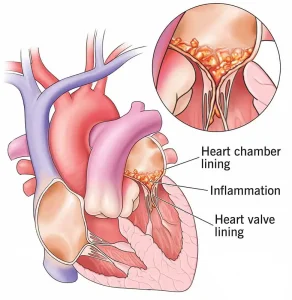
To diagnose endocarditis, healthcare providers perform a detailed physical examination, review medical history, and order several diagnostic tests to confirm or rule out infection in the heart lining or valves.
Tests used to diagnose endocarditis include:
-
Blood culture test: Identifies germs in the bloodstream. Results help determine the specific antibiotic or combination of antibiotics required for treatment.
-
Complete blood count (CBC): Measures levels of white and red blood cells. An increased white cell count indicates infection, while low red blood cells (anemia) may suggest endocarditis.
-
Echocardiogram: Uses sound waves to create moving images of the heart to assess valve function and detect infection-related damage.
-
Transthoracic echocardiogram: A handheld transducer is moved across the chest to visualize the heart.
-
Transesophageal echocardiogram: A transducer inserted through the throat provides detailed images of the heart and valves.
-
-
Electrocardiogram (ECG or EKG): Measures the heart’s electrical activity. While not used specifically for diagnosis, it helps identify rhythm abnormalities linked to endocarditis.
-
Chest X-ray: Shows the condition of the lungs and heart, helping detect heart enlargement or spread of infection to the lungs.
-
CT scan or MRI: Used when there’s a suspicion that infection has spread to the brain, chest, or other areas of the body.
Treatment
Treatment for endocarditis focuses on eliminating infection, repairing heart damage, and preventing recurrence. The approach depends on the cause and severity of the condition.
Medications
-
Antibiotics: High doses of intravenous (IV) antibiotics are given for bacterial endocarditis. Hospitalization is often required for at least a week to monitor response.
-
Once symptoms improve, antibiotics may continue at home under medical supervision for several weeks.
-
-
Antifungal medicines: For fungal endocarditis, antifungal drugs are prescribed. Some individuals may need lifelong antifungal therapy to prevent recurrence.
Surgery or other procedures
Surgery may be necessary when infection persists despite medication or when heart valves are severely damaged.
-
Heart valve repair or replacement: Damaged valves are repaired or replaced using mechanical or biologic tissue valves (from human, cow, or pig tissue).
-
Surgery is also required for fungal infections or recurrent bacterial infections that resist antibiotics.
Early diagnosis and appropriate treatment are crucial to prevent serious complications, such as heart failure or stroke, and to restore normal heart function.
Advertisement
