
Overview
Diagnosis
Diagnosing endometriosis requires a combination of symptom evaluation, physical examination, and imaging or surgical procedures to confirm the presence of endometrial tissue outside the uterus.
Tests to check for clues of endometriosis include:
-
Pelvic exam:
During this examination, your healthcare professional gently feels your pelvic area with gloved fingers to detect any cysts, nodules, scar tissue, or painful spots behind the uterus. However, small areas of endometriosis often can’t be felt unless cysts have formed. -
Ultrasound:
This imaging test uses sound waves to produce images of internal organs. It can be performed as:-
Abdominal ultrasound: The transducer is placed over the abdomen.
-
Transvaginal ultrasound: The transducer is inserted into the vagina for a closer view.
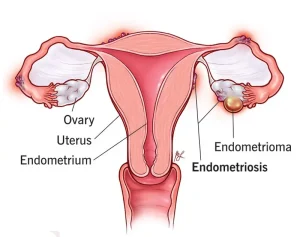
While ultrasound cannot directly confirm endometriosis, it can identify cysts called endometriomas, which are often linked to the condition.
-
-
Magnetic Resonance Imaging (MRI):
MRI scans use magnets and radio waves to create detailed images of pelvic organs and tissues. This test helps map the location, size, and depth of endometriosis growths and is useful for surgical planning. -
Laparoscopy:
This is the most definitive method to diagnose endometriosis. A surgeon makes a small incision near the navel and inserts a slender viewing instrument called a laparoscope to visually examine the abdominal cavity.-
Laparoscopy provides information about the extent and location of endometrial growths.
-
During the same procedure, the surgeon may take a biopsy for testing or remove endometriosis tissue, reducing the need for a second surgery.
-
Treatment
Treatment for endometriosis focuses on pain relief, controlling the growth of endometrial tissue, and preserving fertility. The approach depends on symptom severity and whether you wish to become pregnant.
Pain medicines
-
Nonsteroidal anti-inflammatory drugs (NSAIDs) such as ibuprofen (Advil, Motrin IB) or naproxen sodium (Aleve) can help relieve menstrual cramps.
-
If pain medicines alone aren’t effective, hormone therapy may be added.
Hormone therapy
Hormonal treatments help reduce or stop menstruation, which slows or halts endometrial tissue growth. However, symptoms may return once treatment stops.
Common hormone therapy options include:
-
Hormonal contraceptives: Pills, patches, vaginal rings, or injections can regulate or stop menstrual cycles, leading to lighter periods and reduced pain.
-
Gonadotropin-releasing hormone (Gn-RH) agonists and antagonists: These medications lower estrogen levels and create an artificial menopause, causing endometriosis tissue to shrink. To reduce side effects like hot flashes or bone loss, small doses of estrogen or progestin may be prescribed alongside.
-
Progestin therapy: Stops menstrual cycles and endometrial growth. Options include:
-
IUD (Mirena, Skyla) releasing levonorgestrel
-
Implant (Nexplanon)
-
Birth control shot (Depo-Provera)
-
Progestin-only pills (Camila, Slynd)
-
-
Aromatase inhibitors: Lower estrogen production and may be combined with hormonal contraceptives or progestin to treat persistent endometriosis.
Conservative surgery
-
Aimed at removing endometrial tissue while preserving the uterus and ovaries, beneficial for those wishing to conceive.
-
Usually done through laparoscopic (minimally invasive) surgery.
-
Even after surgery, endometriosis may recur over time.
-
Post-surgery hormone therapy may help prevent symptom recurrence.
Fertility treatment
-
Endometriosis can cause infertility. In such cases, a reproductive endocrinologist may suggest treatments like:
-
Ovulation-inducing medicines
-
In vitro fertilization (IVF) for severe cases
-
Hysterectomy with removal of ovaries
-
Considered a last resort when other treatments fail.
-
Removing the uterus (hysterectomy) and ovaries (oophorectomy) may relieve pain but causes early menopause, which can lead to health risks such as heart disease and bone loss.
-
Some experts recommend targeted excision surgery (removing all visible endometriosis tissue) instead of full organ removal.
Managing endometriosis requires a trusted healthcare team and sometimes a second opinion to understand all treatment options, risks, and long-term outcomes.
Request an appointment
Advertisement
