
Overview
Diagnosis
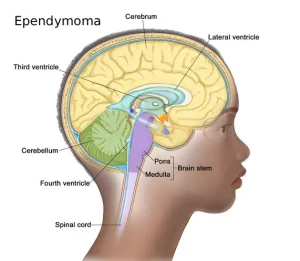
Diagnosis of ependymoma involves a combination of neurological examinations and imaging or lab tests to determine the tumor’s presence, size, and location.
Tests and procedures used to diagnose ependymoma include:
-
Neurological exam – A healthcare professional assesses vision, hearing, balance, coordination, strength, and reflexes. Any abnormalities can help identify which part of the brain or spinal cord may be affected.
-
Imaging tests – MRI (Magnetic Resonance Imaging) is the primary imaging tool used to detect ependymoma. It provides detailed images of the brain and spinal cord and may be combined with magnetic resonance angiography (MRA) for additional detail. Since ependymomas can occur in both the brain and spinal cord, imaging of both regions is typically performed.
-
Cerebrospinal fluid testing (Lumbar puncture or spinal tap) – A needle is inserted between the bones of the lower spine to collect cerebrospinal fluid (CSF). This fluid is then tested for the presence of tumor cells.
Based on test results, surgery is often recommended to remove the tumor. The removed tissue is analyzed in a laboratory to confirm the diagnosis. Pathology tests help determine the tumor type and grade, guiding further treatment decisions.
Treatment
Treatment for ependymoma depends on factors like tumor location, size, type, and whether it has spread. A combination of surgery, radiation, and, in some cases, chemotherapy or targeted therapy may be used.
Surgery
Neurosurgeons aim to remove as much of the tumor as possible.
-
Goal: Complete tumor removal while protecting vital brain or spinal structures.
-
If complete removal isn’t possible, a second surgery or additional treatments may be recommended.
-
Post-surgery care: Further therapies like radiation may be used if cancerous cells remain or if full removal isn’t achievable.
Radiation therapy
-
Purpose: Uses powerful energy beams (X-rays, protons, or others) to destroy remaining tumor cells.
-
When used: Often recommended after surgery to prevent recurrence or when the tumor can’t be entirely removed.
-
Advanced forms:
-
Conformal radiation therapy (CRT) – Shapes radiation beams to match the tumor’s outline.
-
Intensity-modulated radiation therapy (IMRT) – Adjusts beam intensity for precision.
-
Proton therapy – Delivers targeted doses to minimize harm to healthy tissue.
-
Radiosurgery
-
Stereotactic radiosurgery (SRS) delivers multiple focused radiation beams from different angles.
-
Though each beam is weak individually, their intersection provides a strong, targeted dose that destroys tumor cells with minimal damage to surrounding tissues.
Chemotherapy
-
Chemotherapy involves medicines that kill tumor cells.
-
It is less commonly used for ependymoma but may be considered when the tumor recurs after surgery and radiation or in pediatric cases.
Targeted therapy
-
Targeted therapy drugs attack specific molecules or pathways that help cancer cells grow.
-
This treatment may be an option for recurrent or resistant ependymoma, depending on tumor genetics.
Clinical trials
Clinical trials may provide access to emerging treatments or therapies under study.
-
Benefits: Opportunity to try the latest medical advancements.
-
Risks: Possible unknown side effects.
Discuss eligibility and suitability for clinical trials with your healthcare team to explore all potential options.
Advertisement
